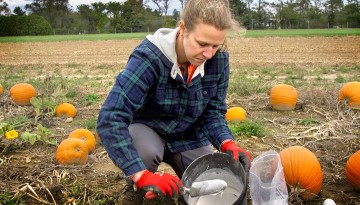
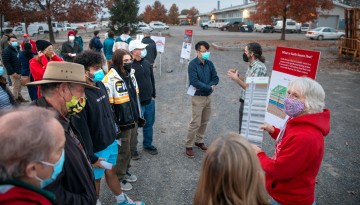
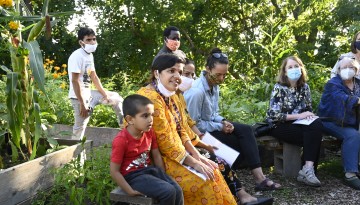
Examples of how community-engaged learning projects can address community needs were showcased during a virtual forum on Nov. 17. The projects demonstrate the College of Human Ecology’s Engaged College Initiative, a partnership between the college and the David M. Einhorn Center for Community Engagement that supports learning with a community engagement component.
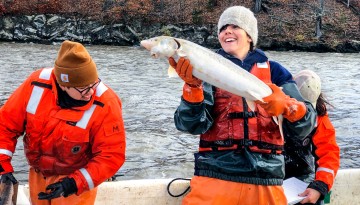
Researchers conducting a population estimate of shortnose sturgeon in the Hudson River caught one on Nov. 19 that had been tagged 26 years ago, during the last such count.
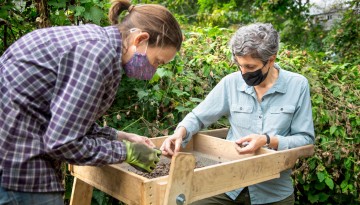
Cornell researchers and students are collaborating with community members to shed light on the role St. James A.M.E. Zion Church played in the abolitionist movement of the 1800s.
The Chicago-based startup Every Body Eat, which produces food free of the 14 most common allergens, took home $1 million in the third annual Grow-NY Food and Agriculture Competition,led by Cornell.
Several Cornellians – appointed by Gov. Kathy Hochul – will explore how thewarming environment will affect New York’s communities, ecosystems and economy in the new Climate Impacts Assessment project.
By summer 2022, Cornell plans to drill a 10,000-foot hole to verify whether conditions underground will allow Earth Source Heat to warm campus and reduce the university’s carbon footprint.
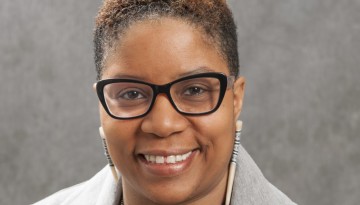
On Nov. 2, Angela Odoms-Young testified before the U.S. Senate Subcommittee on the state of nutrition in the U.S. She highlighted racial inequities in health and nutrition caused by social, political and structural inequalities.
Over 2.9 million New Yorkers across the state — a third of whom are children — rely on food assistance programs. Even temporary food insecurity can be discouraging and disempowering for families — a hard lesson many learned…
Cornell undergraduate and Ithaca Common Council Ward 4 Alderperson Patrick Mehler, ILR '23, discusses the importance of elections, voting and public service on Election Day.