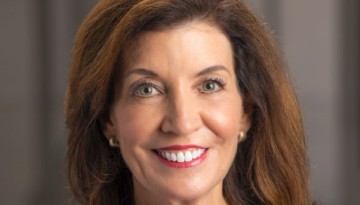
New York growers will get a sustainable boost this planting season from the new Soil Health and Climate Resiliency Act – backed up by Cornell research – and signed into law by Gov. Kathy Hochul.
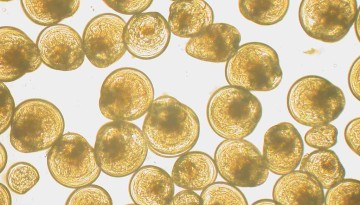
A new research project lead by Aquaculture Specialist Gregg Rivara of Cornell Cooperative Extension Suffolk County is looking at ways to preserve extra shellfish larvae using cryoprotectants.
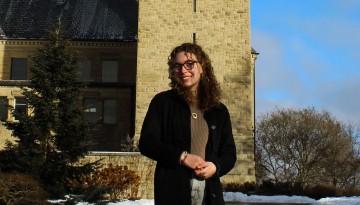
Though Glenn Morgan Parker '25 shared what it was like to take an online course as a Precollege student, thanks to the Atkinson scholarship, and how it helped prepare her for her first year at Cornell.
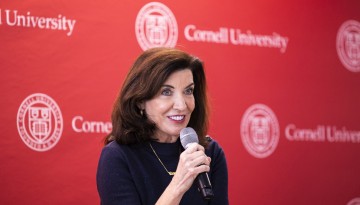
New York Gov. Kathy Hochul outlined plans for rebuilding the state’s infrastructure Feb. 10 at a New York City event sponsored by Cornell’s Institute of Politics and Global Affairs.
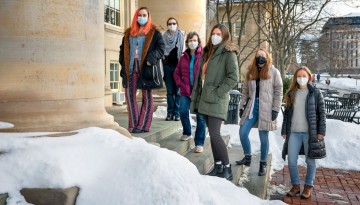
Vaccination Conversations with Scientists, a group of more than 100 Cornell scientist volunteers educating the public about vaccines, is reporting success in shifting unvaccinated people’s beliefs about the shots.
Gov. Kathy Hochul will describe her vision for the state’s infrastructure in a New York City conversation sponsored by the Cornell Brooks School’s Institute of Politics and Global Affairs.
Timothy Murray, professor of comparative literature and literatures in English, has been elected chair of the board of directors of Humanities New York (HNY), a nonprofit humanities council founded in 1975 that supports and advocates for public humanities across the state.