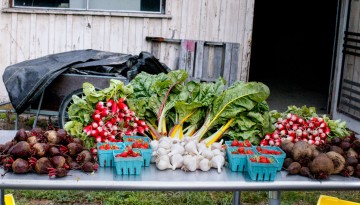
This year, with many people struggling due to COVID-19, Cornell faculty, staff and students facilitated the donation of more than 37 tons of food from farms run by Cornell AES to feed families in need.
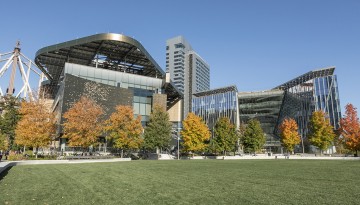
Cornell’s network of business incubators and accelerators have developed into a growing and robust entrepreneurial engine nurtured with resources, training and mentorship that help faculty, research staff and graduate students launch marketable ideas and technologies.
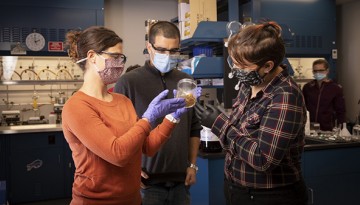
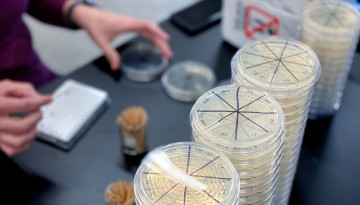
A U.S. Department of Energy agency has awarded $1 million to Cornell researchers, who are using programmed microbes to mine rare-earth minerals used in consumer electronics and advanced renewable energy.
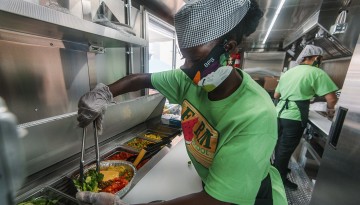
With help from Cornell Cooperative Extension, the Buffalo City School District unveiled a new Farm to School food truck, which will bring locally-sourced hot food to inner city families.
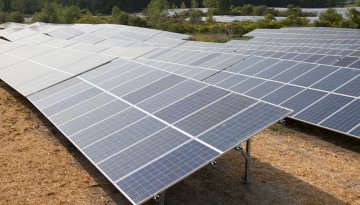
Engineering professor Max Zhang has been awarded a NYSERDA grant to determine efficient solar farm array configurations so the state can avoid land-use conflicts or spoiling precious agricultural space.
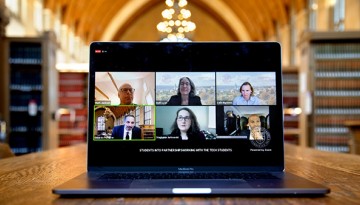
The Oct. 9 StayHomecoming keynote panel featured the work of four Cornell Law School clinics, which offer students real-world experience while helping people who otherwise may not be able to afford legal services.
A new interdisciplinary research project is designed to unlock the power of wind energy by optimizing the spacing between wind turbines and wind turbine arrays to maximize power production.