Rosie, a startup founded at Cornell that offers e-commerce solutions for independent grocers and wholesalers, raised $10 million in Series A financing led by Avenue Growth Partners, a Washington, D.C.-based investment firm.
In partnership with New York community groups, Cornell researchers are developing a hyperlocal weather forecasting system designed to help emergency response.
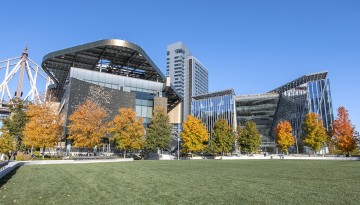
Finding innovative solutions for cities’ most pressing problems is a primary goal of the new Urban Tech Hub, part of the Jacobs Technion-Cornell Institute at Cornell Tech.
Nearly two years after launching, the Praxis Center for Venture Development is reconfiguring its structure to reflect the growth of engineering startups at Cornell and their specialized needs.
The visiting critic discusses the importance of social design shaped by community partnerships, and a collaboration with AAP students and Black high schoolers in Brooklyn.
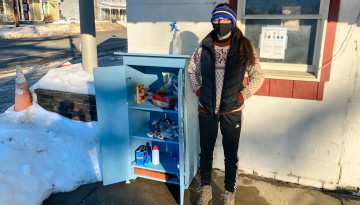
Cornell faculty and students are teaming up with community partners in Tompkins County to address opioid use, increase food security, build a greener construction industry and share stories of Ithaca’s Black history pioneers.
Two New York state companies have been chosen to participate this spring in the Cornell Center for Materials Research JumpStart Program, through which they will collaborate with faculty members to develop and improve their products.
In coastal regions of the Philippines, ties to the community motivate most people to stay in their homes despite the risks of frequent, severe floods, Cornell research finds.
Dimensional Energy – a McGovern Center startup that converts carbon dioxide via sunshine into eco-friendly aviation fuel – is a finalist for the $20 million Carbon X Prize.