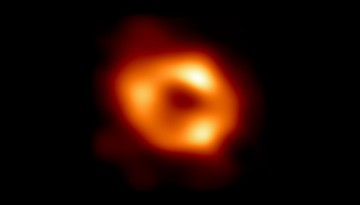
An international team of more than 300 scientists has created the first image of the supermassive black hole at the center of our Milky Way Galaxy. Cornell contributors included Shami Chatterjee and James Cordes from the Department of Astronomy.
The College of Arts and Sciences awarded $1.25 million in grants to faculty members pursuing critical developments in areas ranging from quantum materials to sustainable technologies.
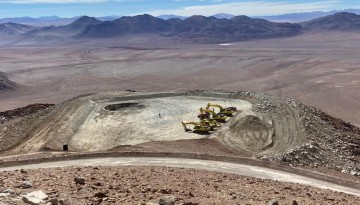
Once it is assembled in Chile, the telescope will deliver a high-throughput, wide-field of view that will be able to map the sky rapidly and efficiently at submillimeter to millimeter wavelengths.
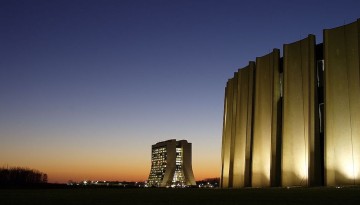
Zepyoor Khechadoorian’s project in high energy physics will be the measurement of the muon anomalous magnetic moment, working with Fermilab advisor Chris Polly.
An agricultural economist, a theoretical physicist, a plant biologist and a physiologist have each been elected to the National Academy of Sciences, the academy announced May 3.
Cornell researchers discovered a strategy to switch the magnetization in thin layers of a ferromagnet – a technique that could eventually lead to the development of more energy-efficient magnetic memory devices.
As water restrictions tighten in Southern California, the Southwest U.S. sees growing evidence of climate change and drought for millions of western residents, according to a Cornell drought expert.
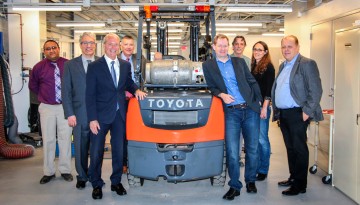
A new Forklift Learning Studio at Cornell will be used to elevate engineering education, turning the vehicles into interactive tools for studying thermofluids, modeling structural mechanics, and experimenting with control dynamics.
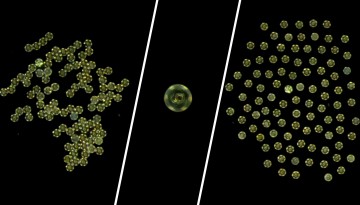
Researchers have developed collectives of microrobots - each slightly larger than a hair's width - capable of reconfiguring their swarm behavior to move in circles, bunch up into a clump, spread out like gas or form a straight line like beads on a string.