Five Cornell assistant professors have been honored by the National Science Foundation with Faculty Early Career Development (CAREER) Awards, with funding totaling more than $2.5 million.
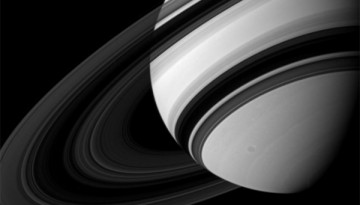
After examining hidden density waves from Saturn’s B-ring, astronomers confirm that this circular object is as lightweight as it is opaque, as published in Icarus.
Cornell chemists Cornell researchers are studying how photovoltaic materials can use solar energy to split water into hydrogen and oxygen, hoping to make the process more efficient and less expensive.
A Cornell team led by Lynden Archer, head of the Department of Chemical and Bimolecular Engineering, has engineered a lithium metal battery based on crosslinked hairy nanoparticles.
Cornell faculty and students will be among thousands of scientists representing an array of research to swarm Washington, D.C., Feb. 11-15 for the annual AAAS meeting and exposition.
Charles Aquadro, Laura Harrington and Sean Nicholson are recipients of the Stephen H. Weiss Presidential Fellowship for outstanding teaching of undergraduates.
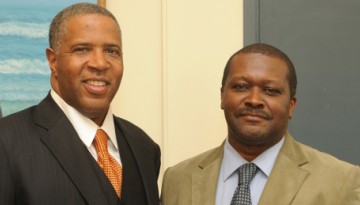
A combined $50 million commitment from Robert F. Smith '85, founder, chairman and CEO of Vista Equity Partners, and the foundation of which he is a founding director will support chemical and biomolecular engineering and African-American and female students in Engineering in Ithaca and at Cornell Tech.
A Cornell team has created the first self-assembled three-dimensional superconductor, another step toward creation of a material that could act as a superconductor at or above room temperature.
A team led by Cornell professor Grace Xing has created gallium nitride power diodes capable of serving as building blocks for GaN switches, with many possible power and electronics applications.