Contributions to Cornell's 2014 United Way Campaign can be now made by giving to any one of United Way of Tompkins County’s many member agencies in the name of family, friends, neighbors or co-workers.
Young people leave upstate New York at typical rates, but the rate of young people moving here is extraordinarily low. A panel discussion Dec. 2 looked at ways to change that scenario.
Students in an interdisciplinary class studied murals in New York City's El Barrio, learning about neighborhood aspects such as culture, history and preservation, and organized a new campus exhibit.
Juvenile offenders sentenced to life without parole in the state of South Carolina recently won the right to new sentencing hearings, thanks to Cornell Law School efforts.
President Barack Obama presented the Presidential Medal of Freedom to the families of slain civil rights workers Michael Schwerner ’61, James Earl Chaney and Andrew Goodman in a ceremony Nov. 24 at the White House.
John W. Bluford III, former president of Truman Medical Center in Kansas City, share lessons in the hospital's efforts to transform health though close community engagement.
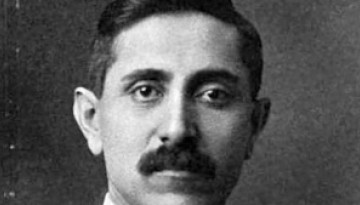
Organized by Modesto Quiroga, Cornell’s Cosmopolitan Club first met Nov. 10, 1904, in Barnes Hall, with 60 students attending. For the next five decades, the Cosmopolitan Club fostered international awareness and elevated peaceful thoughts.