Cornell faculty are reaching across disciplines to tackle society’s most complex challenges and to make breakthrough discoveries. These radical collaborations—collisions of thoughts and perspectives from vastly different fields—lead to unexpected and unconventional solutions and deepen our thinking.

Study: Americans skeptical of COVID-19 contact tracing apps

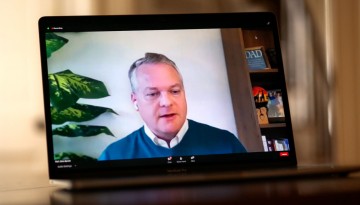
Mobile contact-tracing technology has emerged as one way to contain COVID-19, but contact tracing apps, which require a critical mass of adopters to be effective, face serious obstacles in the U.S., Cornell researchers have found.

New imaging method views soil carbon at near-atomic scales

A new study describes a breakthrough method for imaging the physical and chemical interactions that sequester carbon in soil at near atomic scales, which may have implications for mitigating climate change.

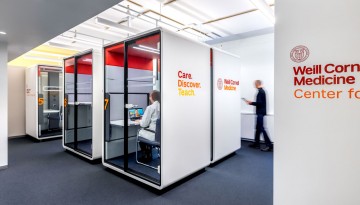
COVID-19 patient registry helping track disease’s evolution

A Cornell-led COVID-19 patient registry, organized by Weill Cornell Medicine, continues to be a source of medical insight into the workings of the novel coronavirus and treatment of infected patients.

Spatial maps give new view of gut microbiome

Cornell researchers developed an imaging tool to create intricate spatial maps of the locations and identities of hundreds of different microbial species, such as those that make up the gut microbiome.

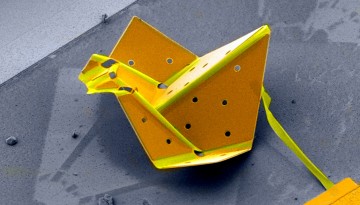
Worm-like, soil-swimming robots to measure crop underworld

A Cornell project funded by two separate three-year grants will develop worm-like, soil-swimming robots to sense and record soil properties, water, the soil microbiome and how roots grow.

Susan Daniel wields biomolecular weapons to fight COVID-19

Years before COVID-19 turned into a global pandemic, biomolecular engineer Susan Daniel was already looking for ways to defeat it. Now she’s expanding her coronavirus studies, blending engineering with virology and data science.

Researchers trap electrons to create elusive crystal

A Cornell-led collaboration has developed a way to stack two-dimensional semiconductors and trap electrons in a repeating pattern that forms the long-hypothesized Wigner crystal.

‘One Health’ a key focus of COVID-19 Summit

The “One Health” approach is perfectly suited to tackling the COVID-19 pandemic, the most serious public health crisis in recent history, Cornell researchers said during the university’s COVID-19 Summit, a virtual event held Nov. 4-5.

$2M grant supports more sustainable path for organic farmers

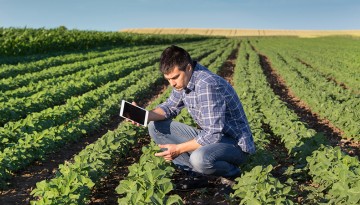
Organic crop farmers in the Northeast and Upper Midwest are facing an increasing number of challenges related to climate change and invasive pests, but a $2 million grant from the USDA will help them find sustainable solutions.