Cornell faculty are reaching across disciplines to tackle society’s most complex challenges and to make breakthrough discoveries. These radical collaborations—collisions of thoughts and perspectives from vastly different fields—lead to unexpected and unconventional solutions and deepen our thinking.
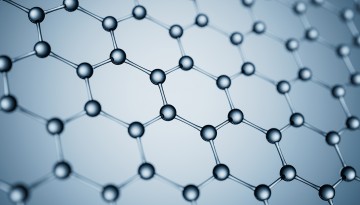
Self-folding nanotech creates world’s smallest origami bird

Cornell researchers have created what is potentially the world’s smallest self-folding origami bird by using micron-sized shape memory actuators to bend and hold its form.

Food supply chain app wins digital ag hackathon

An app that would maximize profit and minimize food spoilage and loss across the agriculture supply chain was named the grand prize winner in the third annual Cornell Institute for Digital Agriculture Hackathon.

Atkinsons’ $30M gift to name multidisciplinary building

A $30 million commitment from David R. Atkinson ’60 and Patricia Atkinson will name a new multidisciplinary building on campus, intended to foster innovative and collaborative research in key university priority areas.

Ezra

Migrations grants to fund research on racism, dispossession

New grants from the Migrations initiative seeks to support work in migrations-related research, pedagogy and engagement with a specific focus on racism and dispossession.

$750K awarded for intercampus research

The Office of Academic Integration has awarded $750,000 in seed grants to 10 studies ranging from refugee health and legal rights, to a vaccine treating fentanyl addiction and overdose, to pancreatic cancer and antibiotic tolerance.

NSF challenges Cornell to tame winter, natural disasters

In partnership with New York community groups, Cornell researchers are developing a hyperlocal weather forecasting system designed to help emergency response.  

New initiative engages communities in neuroscience

The Bronfenbrenner Center for Translational Research is launching a new project – the Community Neuroscience Initiative, or CNI – that will build connections between neuroscience, the social sciences and communities.

Around Cornell

From vaults to virtual classes, library archives enrich teaching

Archivists, curators and librarians are finding virtual ways to help faculty members teach, using gems from Cornell University Library’s rare collections, from medieval texts on parchment to punk show flyers.

Ultrawide bandgap gives material high-power potential

A Cornell collaboration has found a way to grow a single crystalline layer of alpha-aluminum gallium oxide that has the widest energy bandgap to date – a discovery that clears the way for new semiconductors that will handle higher voltages, higher power densities and higher frequencies than previously seen.