Cornell-developed anti-TB compound headed to trials

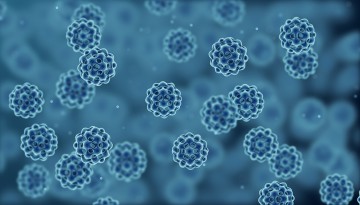
A novel compound, developed by College of Veterinary Medicine researchers, that has the potential to starve the bacteria that causes tuberculosis – the world’s second-leading infectious killer – is entering human clinical trials.

Staff News

‘Wrinkles’ in time experience linked to heartbeat

New Cornell psychology research finds that our moment-to-moment experience of time is synchronized with, and changes with, the length of a heartbeat.

Robot provides unprecedented views below Antarctic ice shelf

The Icefin team’s observations revealed more than a century of geological processes beneath the Ross Ice Shelf near where it meets Kamb Ice Stream, and will inform models of sea-level rise.

Made in the shade: Growing crops at solar farms yields efficiency

In the face of climate change, growing commercial crops under acres of solar panels is a potentially efficient use of agricultural land that can boost food production and improve panel longevity.

‘Swarmalators’ better envision synchronized microbots

A simple model that simultaneously simulates swarming behaviors and synchronized timing takes a step toward engineering microrobots and furthering our understanding of such phenomena in biology.

Astronomers discover metal-rich galaxies in early universe

Their analysis of James Webb Space Telescope data produced a serendipitous discovery: a previously hidden galaxy that seems to have hosted multiple generations of stars despite its young age, estimated at 1.4 billion years old.

Nine professors win NSF early-career awards

Researchers studying statistics applications in systems biology and next-generation wireless technology are among the nine Cornell faculty members who’ve received National Science Foundation Faculty Early Career Development Awards.

Staff News

To promote exercise, planners must look beyond cities

Streets and neighborhoods that are friendlier to walkers and bikers increase physical activity but have limited benefit outside urban centers, Cornell research finds.

Single gene causes stinging cell to lose its sting

Disabling a single regulatory gene in a species of sea anemone caused a cell used for hunting and self-defense to completely shift its form and function, opening a door to better understanding evolutionary mechanisms, according to a new study.