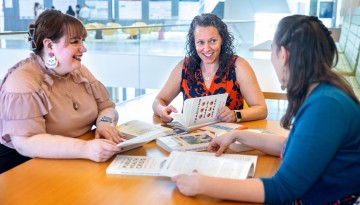
A team of faculty members and researchers, led by Gen Meredith from the College of Veterinary Medicine’s Department of Public and Ecosystem Health, has partnered with eCornell to launch the Public Health Essentials online certificate program.
Broome County is enlisting the expertise of Cornell researchers and other specialists to implement advanced “smart city” technology, aiming to potentially enhance flood warnings, provide real-time parking updates and optimize waste management.
Research from Wendong Zhang of Dyson and collaborators shows that countries classified by the federal government as “adversary,” such as China, held only 1% of the roughly 40 million acres of foreign-owned farmland as of 2020.
Research by Alexander Fulmer ’15 of the Nolan School found that for certain types of products, consumers prefer the use of chance in selecting products to promote rather than more traditional, intentional methods.
A multidisciplinary team of researchers tested several methods of data visualization in an immersive virtual reality classroom to give teachers a way to gauge how their gaze was distributed.
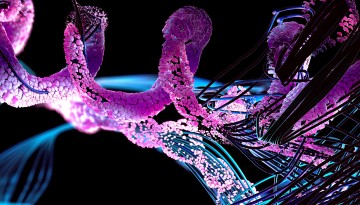
An interdisciplinary collaboration has designed a way to “cloak” proteins so they can be captured by lipid nanoparticles and delivered into living cells, where the proteins uncloak and exert their therapeutic effect.
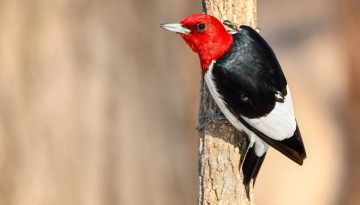
Load-bearing bones within the wings of smaller birds may evolve more freely than they do in larger birds, since larger birds have to resist higher levels of stress on their skeletons.
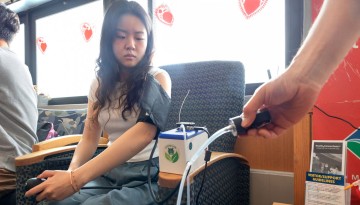
Using low-frequency radio waves to send blood pressure data, a group of students has provided a proof of concept that could enable in-home health care for people without cellular or broadband access.