Cornell researchers have the opportunity to take a long stride toward an alternative future full of possibility, with support from Global Cornell’s new Global Grand Challenge: The Future. On Jan. 29 Global Cornell opened what will be the initiative’s only call for proposals.
Researchers at the ILR School and University of Michigan suggest giving people a script to get an honest answer – even if it’s a hard “no” – instead of acquiescence motivated by awkwardness or guilt.
Inflation has been reined in without creating recessionary conditions, Steven Kyle said at the Dyson Agricultural and Food Business Outlook conference on Jan. 19.
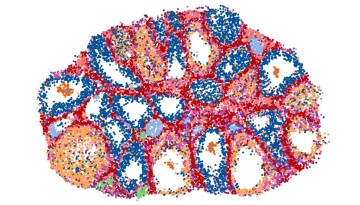
An interdisciplinary collaboration used a cutting-edge form of RNA tagging to map the gene expression that occurs during follicle maturation and ovulation in mice, an approach that could lead to therapeutic treatments for infertility.
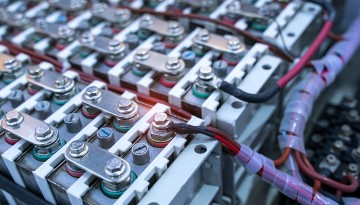
A team in Cornell Engineering created a new lithium battery that can charge in under five minutes – faster than any such battery on the market – while maintaining stable performance over extended cycles of charging and discharging.
In a recent study published in Social Science and Medicine, a multidisciplinary team sought to deepen regulators’ understanding of how both adults and teens respond to warning labels on e-cigarettes.
Researchers in the Baker Institute for Animal Health have created a genetically engineered mouse model that could shed light on the causes of human infertility and allow researchers to explore other areas of reproduction.
Democratic backsliding is occurring in an unprecedented number of wealthy countries once thought immune to such forces – the United States among them, finds a new analysis led by Cornell political scientists.
A multidisciplinary task force of Cornell faculty and staff has issued a report offering perspectives and practical guidelines for the use of generative artificial intelligence in the practice and dissemination of Cornell’s academic research.