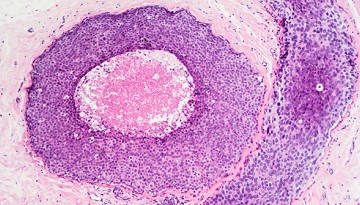
A new study – using lab mice genetically modified with a human gene to shed light on a potential link between arsenic exposure and diabetes – revealed that while the male mice exposed to arsenic in drinking water developed diabetes, the female mice did not.
Ask ChatGPT to find a well-known poem and it will probably regurgitate the entire text verbatim – regardless of copyright law – according to a new study by Cornell researchers.
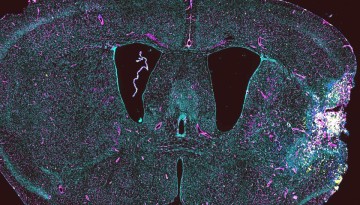
Researchers at Weill Cornell Medicine have catalogued the cellular response to stroke in a preclinical model, identifying the immune cells involved and the roles they may play in the days and weeks following a stroke.
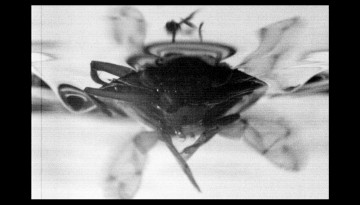
Whirligig beetles – the world’s fastest-swimming insect – achieve surprising speeds by employing a strategy shared by fast-swimming marine mammals and water fowl.
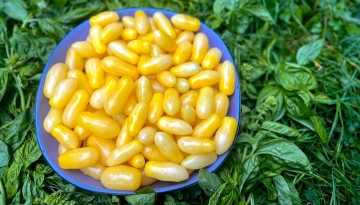
Phillip Griffiths, a Cornell plant breeder, has developed an unusual tomato – with yellow flesh and an oblong shape that prompted its fans to name it “Yellow Submarine.”
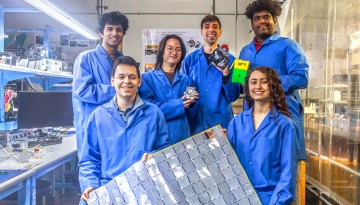
A light sail, which uses the momentum of sunlight to travel through space and could one day propel small spacecraft through interstellar realms, is headed to the International Space Station for testing on behalf of Cornell’s Space Systems Design Studio.
Weill Cornell Medicine researchers received a $2.4 million grant from the U.S. Department of Defense Breast Cancer Research Program to evaluate a test that uses an artificial intelligence algorithm to determine whether a patient is positive for cancer.
In the Northeast, December temperatures helped to make 2023 the warmest year on record for 13 of the region’s 35 major urban areas, including New York City, says Cornell’s Northeast Regional Climate Center.
A new FAO book highlights agricultural biotechnologies used to serve the needs of smallholders in developing countries and features a case study on Bt eggplant, the first bioengineered food crop approved in South Asia.