New research from Cornell SC Johnson College of Business unravels the organizational and social dynamics influencing entrepreneurship in the fashion industry.
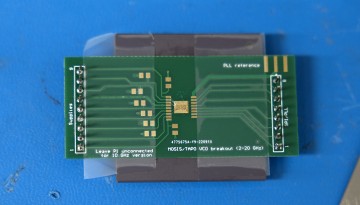
Researchers developed a semiconductor chip that will enable ever-smaller devices to operate at the higher frequencies needed for future 6G communication technology.
Calling for loyalty to a group, rather than to an individual, was more effective in eliciting followers’ compliance with unethical requests, Johnson School researcher Angus Hildreth found.
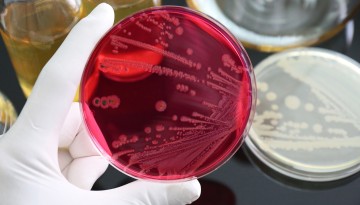
A study of more than 5,000 salmonella bacteria isolated over 15 years from dairy cattle samples in the Northeast reveals a significant increase in resistance to the antimicrobial medications ampicillin, florfenicol and ceftiofur.
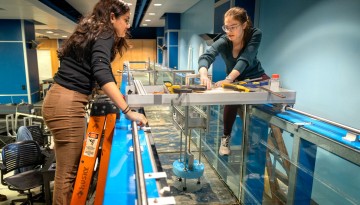
Two Cornell Engineering undergraduates are working to make arrays of wave energy converters – devices catch the waves and turn them into electricity – and move the technology closer to actuality.
Decades before any probe dips a toe – and thermometer – into the waters of distant ocean worlds, Cornell astrobiologists have devised a way to determine ocean temperatures based on the thickness of their ice shells, effectively conducting oceanography from space.