Recent uncertainties regarding the legal status of the DACA program underscore the urgency for policymakers to reassess long-standing restrictions on government-sponsored health care subsidies for immigrants.
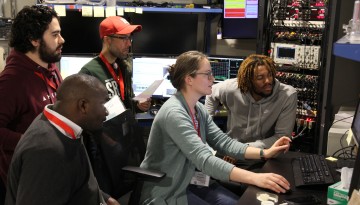
The HEXT workshop empowers students to become productive members of the CHESS user community by combining informative lectures, hands-on demonstrations, and instruction in proposal writing. With its focus on attracting diverse participants and providing practical training, the HEXT workshop sets the stage for a more inclusive and vibrant synchrotron research landscape.
A research team co-led by Cornell found that for schools without the resources to conduct learning analytics to help students succeed, modeling based on data from other institutions can work as well as local modeling, without sacrificing fairness.
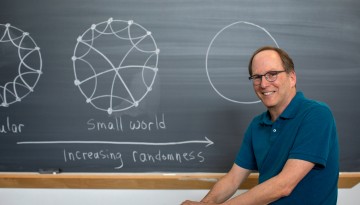
In 1998, Professor Steven Strogatz and then-student Duncan Watts, Ph.D. '97, published a model that launched the field of network science – the results of which are ubiquitous in today’s world.
Venturing out of one’s comfort zone to perform a task – and then performing poorly in that task, such as a baseball pitcher trying to hit – can lead to better performance when returning to one’s specialty, new research suggests.
A new study finds thathundreds of bacterial groups have evolved in the guts of primate species over millions of years, but humans have lost close to half of these symbiotic bacteria.
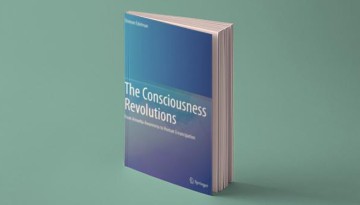
Shimon Edelman traces the evolution of consciousness through his newest book, “The Consciousness Revolutions: From Amoeba Awareness to Human Emancipation.”
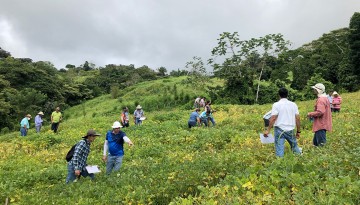
Research by Ph.D. student Sergio Puerto involved recruiting farmers as citizen-scientists to grow and assess seeds under a far greater diversity of conditions than would be possible for plant breeders to do alone.