New grants from the Cornell Center for Social Sciences (CCSS) will fund research ranging from exploring why people spread polarizing content online to assessing health care access in rural New York.
Increasing women’s representation in science, technology, engineering and math majors will reduce – but not nearly eliminate – gender disparities in STEM occupations, new Cornell sociology research finds.
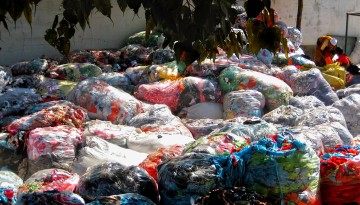
To make textiles more sustainable, a new method allows researchers to break old clothing down chemically and reuse polyester compounds to create fire resistant, anti-bacterial or wrinkle-free coatings that could then be applied to clothes and fabrics.
The Yang-Tan WorkABILITY Incubator, recently launched through the ILR School’s Center for Applied Research on Work, will support innovative applied research projects and collaborations.
In a review of more than three decades’ worth of studies a Cornell-led research group found that more research on messaging that includes the voices of historically marginalized people is necessary in the push toward equity.
New research from a multidisciplinary team helps to illuminate the mechanisms behind circadian rhythms, offering new hope for dealing with jet lag, insomnia and other sleep disorders.
Targeting part of a key antiviral pathway may one day offer a new therapeutic approach to deterring or delaying cognitive decline, according to preclinical research led by Weill Cornell Medicine scientists.