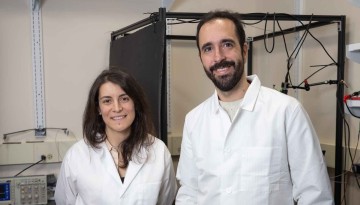
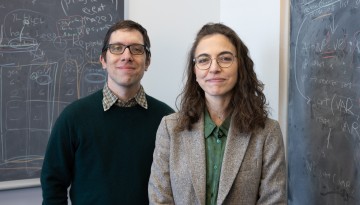
A pair of researchers in the Department of Neurobiology and Behavior are designing new technology and research methods to discover how brain circuits support learning and memory.
Black and Indigenous Americans are far more likely to experience homelessness than other groups, according to a Cornell-led study that is the first to report national, annual rates of sheltered homelessness over time across race and ethnicity.
Avery August, Ph.D. ’94, and David Russell, both professors in the Department of Microbiology and Immunology in the College of Veterinary Medicine, have been elected to the American Academy of Microbiology.
Nicola Dell’s work in human-computer interaction improves computer security and privacy for victims of intimate partner violence, strengthens digital privacy in non-Western contexts, and informs technology that supports home health care workers.
First-of-their-kind observations reveal new details about melting at the grounding line of the vulnerable Thwaites Glacier that is contributing to its retreat and potentially to sea-level rise, according to Cornell researchers and international collaborators.
Assistant professors Eshan Chattopadhyay, Debanjan Chowdhury, Andrew Musser, Angeline Pendergrass and Andrej Singer have won 2023 Sloan Research Fellowships from the Alfred P. Sloan Foundation.
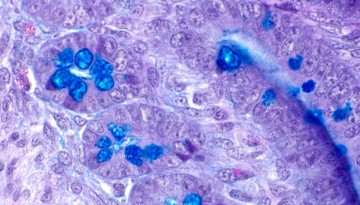
Metal oxide nanoparticles – commonly used as food coloring and anti-caking agents in commercial ingredients – may damage parts of the human intestine, say Cornell and Binghamton University scientists.
Dyson professor Suzanne Shu and colleagues found that considering one’s “future self” played a key role in how people decide when to start collecting monthly Social Security benefits. Societal norms regarding retirement, however, do not.