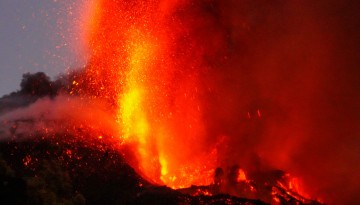
Cornell scientists have unearthed precise, microscopic clues to where magma is stored in Earth’s mantle, offering scientists – and government officials – a way to gauge volcanic eruption risk.
An investigation at Tirez lagoon in central Spain, analogous to the surface of Mars, concludes that if life existed when the planet had liquid water on its surface, desiccation would not have necessarily implied that life disappeared for good.
Johnson associate professor Ori Heffetz and a colleague conducted experiments in three countries to gauge the public’s perception of relative risk factors of different public health behaviors amid the COVID-19 pandemic.
Cornell will teach small farmers in India – the world’s largest dairy producer – how to produce milk more efficiently while limiting greenhouse gas emissions.
White-tailed deer – the most abundant large mammal in North America – are harboring SARS-CoV-2 variants that once widely circulated but are no longer found in humans.
Twelve Cornell and Weill Cornell Medicine faculty members – six of whom are also Cornell alumni – have been elected fellows of the American Association for the Advancement of Science, the world’s largest general scientific society.
Positive everyday racial encounters may increase self-esteem and help counteract negative experiences from discrimination, according to new Cornell psychology research.
New Cornell research is providing a fresh view into the ways a common chemotherapy agent, etoposide, stalls and poisons the essential enzymes that allow cancer cells to flourish.