In new book, Matthew Evangelista, the President White Professor of History and Political Science in the Department of Government, examines why Allied bombing raids during World War II killed tens of thousands of Italian civilians after the armistice signed in September 1943, when Italy was no longer an enemy.
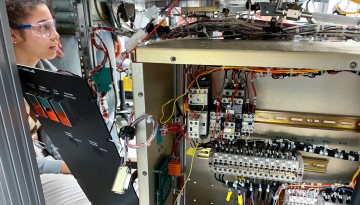
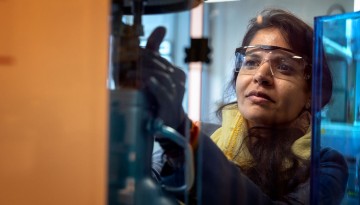
For the past five years at Cornell, New Visions has provided local students the opportunity to explore engineering careers and perform research activities typically experienced by college students.
In a new pilot run by Cornell and NYSEG, participants will pay a flat rate for their electricity bill and use an app that provides information about how to reduce electricity use and costs.
The Klarman Postdoctoral Fellowship program in Arts and Sciences has been expanded to 10 fellows per cohort and extended by five years, thanks to additional significant support from Seth Klarman ’79 and Beth Schultz Klarman.
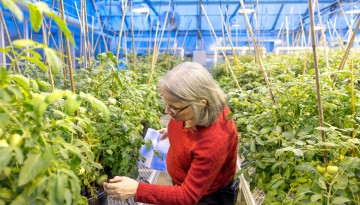
A Cornell researcher has completed a decades-long program to develop new varieties of tomato that naturally resist pests and limit transfer of viral disease by insects.
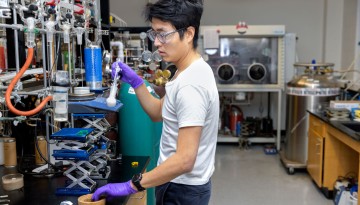
A Cornell engineering professor will play a major role in a new federally funded project to increase the domestic supply of minerals needed to improve and sustain green energy.
Results from the Cornell-led 2022 Collaborative Midterm Survey will be released Friday. The innovative survey of more than 19,000 Americans recorded opinions on a range of public affairs topics. It also will advance the science of survey research.
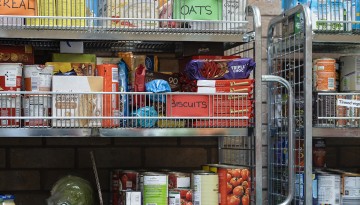
Cornell researchers found that visual depictions of food pantry offerings, including brand names, have an ameliorative effect on negative product perceptions.