A Cornell team has developed a way to spatially map the entire spectrum of RNA in a cell’s transcriptome, revealing the role of previously elusive RNA in skeletal muscle regeneration and viral myocarditis in mice.
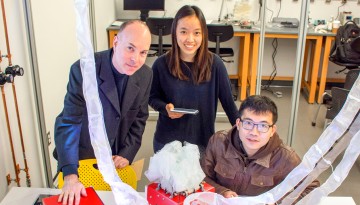
Supported by a National Science Foundation grant, Keith Evan Green, director of the Architectural Robotics Lab, is advancing a new category of robots that people will inhabit.
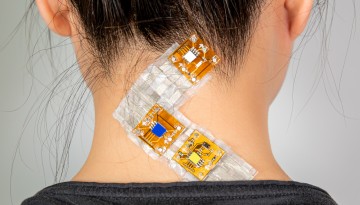
Members of Cornell’s Hybrid Body Lab have come up with a reliable on-skin computing interface that’s easy to attach and detach, and can be used for a variety of purposes – from health monitoring to fashion.
In a new book, “Seeking Truth and Hiding Facts,” Jeremy Lee Wallace, associate professor of government, explains why a few numbers long defined Chinese politics – until they no longer measured up.
Parking-ticket recipients who would benefit most from gentle “nudges” to pay their fines – those who are least responsive to tickets in the first place – respond least to those reminders, according to research from Johnson associate professor Ori Heffetz.
Both the type of online content moderator and the “temperature” of the harassing content influenced people’s perception of the moderation decision, new research finds.
Viral DNA in human genomes, embedded there from ancient infections, serve as antivirals that protect human cells against certain present-day viruses, according to new research.