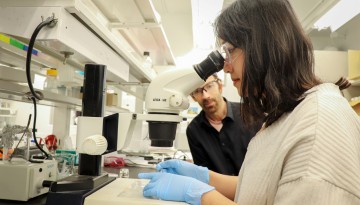
By linking a national vascular registry with medical data records in Medicare claims for patients who underwent endovascular abdominal aortic aneurysm repair, a team of researchers from across the country was able to identify which devices posed the most risk for reintervention.
Cornell has been selected to join the Schmidt AI in Science Postdoctoral Fellowship, a program of Schmidt Futures, to accelerate the next scientific revolution by applying artificial intelligence to research in science, technology, engineering and mathematics.
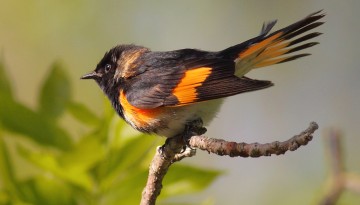
Birds attracted by the glow of artificial light at night are drawn into areas where they are also exposed to higher concentrations of airborne toxic chemicals, according to a study from the Cornell Lab of Ornithology.
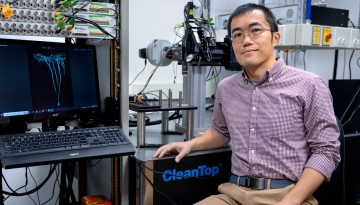
Associate professor Alex Kwan is using optical microscopy and other tools to map the brain’s neural response to psychedelic drugs, an approach that could lead to the development of fast-acting antidepressants.
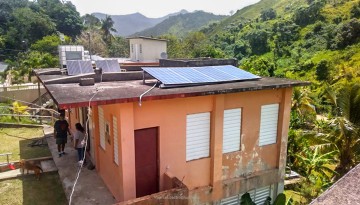
Brooks School students in a hands-on infrastructure class have developed a solar power policy proposal to combat Puerto Rico's persistent power outages.
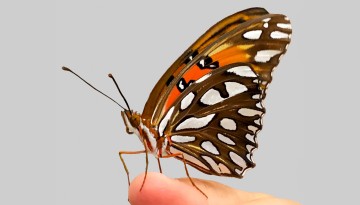
Butterfly wing patterns have a basic plan to them, which is manipulated by non-coding regulatory DNA to create the diversity of wings seen in different species, according to new research.
The research from the Boyce Thompson Institute focuses on neurotransmitter serotonin, which carries messages between nerve cells and is thought to play a role in several mental health conditions.
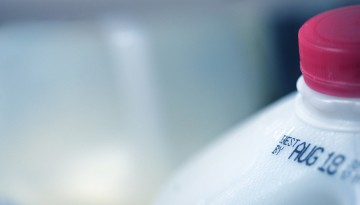
Changing the wording about expiration dates on perishable food items – which is currently unregulated and widely variable – could help reduce food waste, according to a new Cornell-led study.
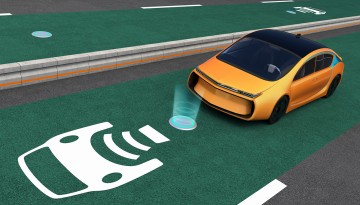
Efficient pricing will be crucial to minimize energy costs for private operators who provide on-the-highway wireless charging for electric cars – and for consumers who will use this service.