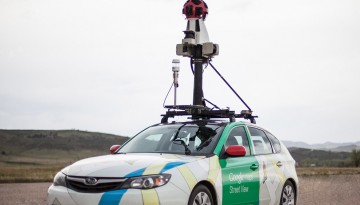
Just 10 taxis equipped with mobile sensors can survey a third of Manhattan’s streets in a day, inexpensively gathering valuable data about factors such as air quality, street conditions and bridge stability to provide an accurate and timely snapshot of a city’s health, according to a new study including a Cornell researcher.
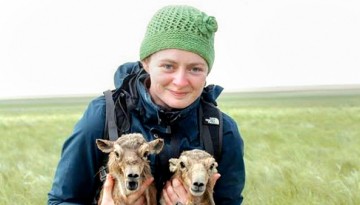
Dr. Wendy Beauvais, a postdoc in the College of Veterinary Medicine, has used a 2015 mass mortality event to create a framework to assess and prioritize future risks of pathogens jumping to wildlife.
With this year’s focus on diversity and inclusion, youth development researchers and practitioners gathered May 29-30 in Ithaca for the ninth annual Youth Development Research Update.
A Cornell-Environmental Defense Fund research team has found there is more methane being emitted from the ammonia fertilizer industry than the EPA had estimated for all industrial processes in the U.S.
Cornell plant breeders and geneticists, who’ve played a significant role in the improvement of the potato, are expanding their efforts as they make more wild potato seeds available to breeders around the world.
Eighteen Cornell doctoral students from 13 fields of study have received 2019-20 Engaged Graduate Student Grants to support community-engaged research relevant to their dissertations.
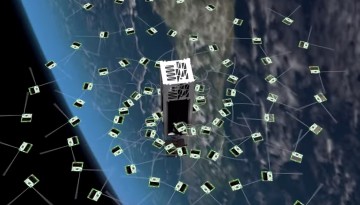
Demonstrating a new type of space technology, 105 of the world’s smallest free-flying satellites have just completed orbiting Earth, sending short signals received by a ground station at Cornell.
The Atkinson Center is awarding more than $1.3 million in seed grants to support roughly a dozen interdisciplinary research collaborations at Cornell that address key sustainability challenges.
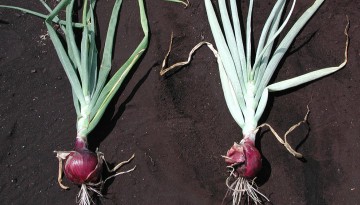
A common onion pest was wreaking havoc on New York state onion crops, but Brian Nault of Cornell AgriTech developed a science-based strategy that has decreased pesticide use and improved onion quality.