Prabhu Pingali, founder of the Tata-Cornell Institute for Agriculture and Nutrition, is making progress in his quest to discover why 15% of Indians – nearly 200 million people – remain malnourished.
A measure to conserve groundwater in northwestern India has led to unexpected consequences: Added air pollution in an area already beset by haze and smog.
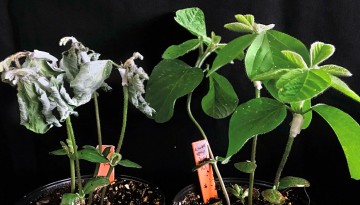
Protecting crops from pests and pathogens without pesticides has been a longtime goal of farmers. Researchers at Boyce Thompson Institute have found that compounds from microscopic soil roundworms could achieve this aim.
A new study co-authored by Kelly Zamudio, professor of ecology and evolutionary biology, shows that increasing class size has the largest negative impact on female participation in STEM classrooms.
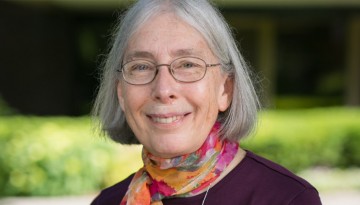
Martha P. Haynes, the Goldwin Smith Professor of Astronomy, has received the 2019 Catherine Wolfe Bruce Gold Medal for career achievement, from the Astronomical Society of the Pacific.
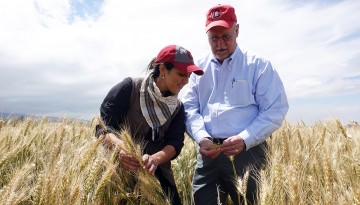
Ronnie Coffman, director of International Programs in the College of Agriculture and Life Sciences, addressed the International Wheat Congress July 23 in Canada, urging renewed commitment to germplasm exchange.
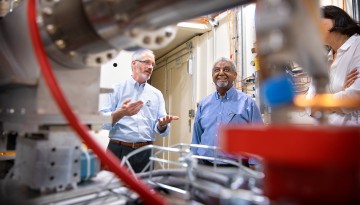
The Cornell High Energy Synchrotron Source, or CHESS, has been awarded $54 million from the National Science Foundation for a new subfacility, the Center for High-Energy X-ray Sciences at CHESS.
Cornell researchers have released a free, open-source software to help make potentially subjective and time-consuming plant breeding decisions more consistent and efficient.
In a study designed to measure perceptions of inequality, Cornell researchers found that winners of a simple card game were far more likely than losers to believe the game’s outcome was fair, even when it was heavily tilted in their favor.