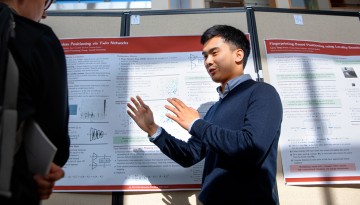
The student-run symposium recognizes research achievement and provides a venue for undergraduates to communicate their work in a scholarly environment.
A Cornell researcher is collaborating on an unprecedented study examining Facebook data to look for patterns in “problematic sharing” – posting links to stories that have already been flagged or proven false – to determine whether this activity spikes around elections or terrorist attacks.
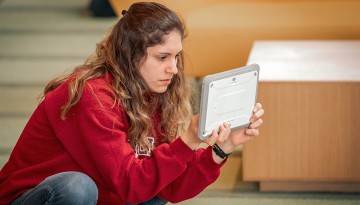
Students at the Cornell College of Veterinary Medicine can now get a leg up in learning equine anatomy, thanks to a custom-designed app created at the college.
A visionary 19th-century academic and innovator whose contributions helped usher mechanical engineering into the modern era, Thurston turned Cornell into the largest and most prominent mechanical engineering program in the country.
New research led by psychology professor Melissa Ferguson, published in Proceedings of the National Academy of Sciences, offers a roadmap for dealing with “fake news.”
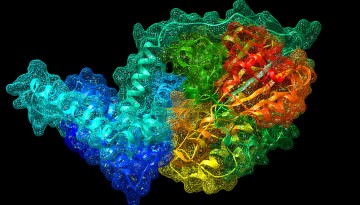
While sifting through the bacterial genome of salmonella, Cornell food scientists discovered mcr-9, a stealthy jumping gene so diabolical that it resists one of the world’s few last-resort antibiotics.
A discovery by researchers at Weill Cornell Medicine has revealed that a molecule produced in stem-like cells may be therapeutic targets for obesity and related disorders.
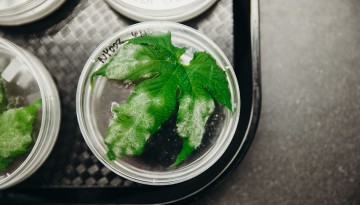
Thanks to research led by Cornell AgriTech’s David Gadoury, farmers may no longer have to rely on fungicides to control powdery mildew, a rampant plant fungal disease.
A collaboration between five colleges and a provost’s office investment of $2 million has led to a major revitalization of Cornell’s capabilities in flow cytometry, a vital part of cell research.