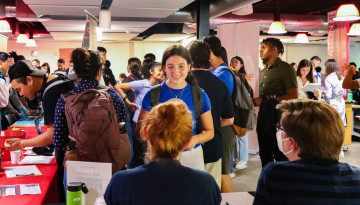
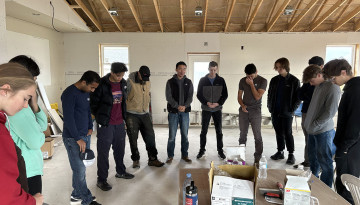
Thirty student startups received Human Spirit, Beck Fellows and Cane Entrepreneurial Scholars awards this summer from Entrepreneurship at Cornell, funding that will allow students to work on their startups rather than take traditional summer positions.
The Roper Center for Public Opinion Research has announced its 2026 cohort of student scholars, supporting emerging researchers whose work advances the study of public opinion and its role in shaping policy and society.
Individuals in a morally diverse community tend to believe that the community’s norms are looser. In turn, norm violations are more accepted, and there is a reduced willingness to police transgressions, according to research by Merrick Osborne, assistant professor of organizational behavior at the ILR School.
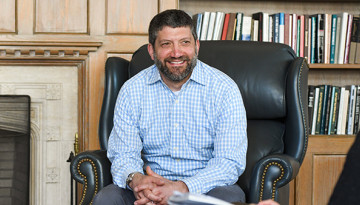
Michael Lovenheim, professor of economics at the ILR School and in the Jeb E. Brooks School of Public Policy, has been appointed the next editor of the Journal of Human Resources (JHR). Having served as the JHR’s coeditor since 2018, Lovenheim succeeds Anna Aizer (Brown University) and will assume the role on July 1.
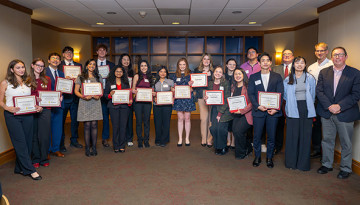
Three Cornell undergraduates are recipients of this year’s Robinson-Appel Humanitarian Awards, which recognize students for their commitment to community-engaged work addressing pressing social challenges.
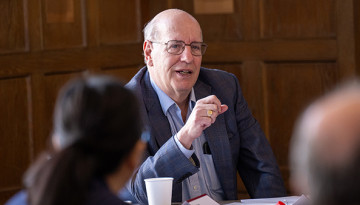
Harry Katz, the Jack Sheinkman Professor of Collective Bargaining at the School of Industrial and Labor Relations, was honored at a conference the weekend of April 11-12 as fellow scholars, colleagues and mentees presented papers that draw on his work by extending the context in which his insights are applied, his methods used and theoretical assumptions made.