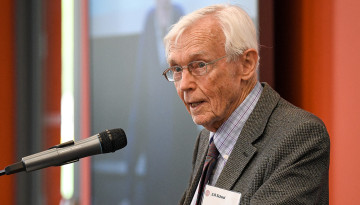
ILR Dean Alexander Colvin, Ph.D. ’99, will explore how insights from the work of the late Robert “Bob” McKersie, former ILR School dean, relate to the state of labor today when he delivers the inaugural McKersie Labor Day Lecture on Friday, Sep. 4.
The AI sector is not in a bubble market, but the prices of some individual AI companies behave with the price variability and exuberance characteristic of a bubble, according to new Cornell research.
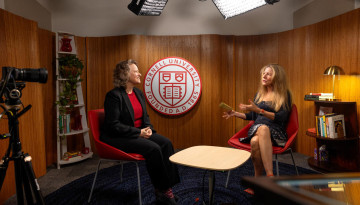
The second season of Research Matters, a Cornell video podcast, drops today, with a way-too-relevant episode on why we don't always do the things we know we should.
To reduce the challenges of job searching, autistic applicants should rehearse socially appropriate responses and practice answering interview questions about teamwork with examples from previous experiences.
Researchers studying ribosomes, AI and quantum computing are among 13 early-career professors from Cornell who’ve recently been awarded National Science Foundation Faculty Early Career Development Awards.
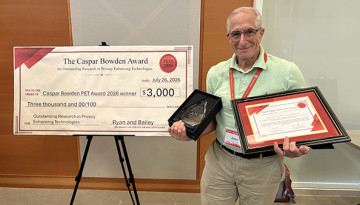
John Abowd, professor emeritus of economics, statistics, and data science at Cornell and Lars Vilhuber, research professor and executive director of ILR’s Labor Dynamics Institute, have received the 2026 Caspar Bowden PET Award for Outstanding Research in Privacy Enhancing Technologies.
A new way to measure comorbidity can be used to accurately predict a patient’s risk of hospitalization and future healthcare costs across a population.
New research by Forrest Briscoe examined how reported violence in protests was associated with increased local corporate diversity action announcements.