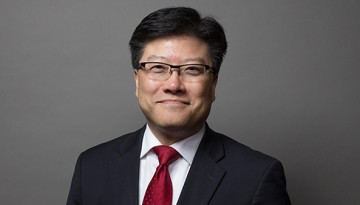
A conversation with Dr. Augustine M.K. Choi, who has served as the Stephen and Suzanne Weiss Dean of Weill Cornell Medicine and Cornell University’s provost for medical affairs since January 2017.
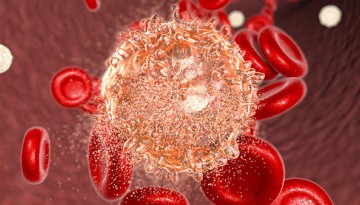
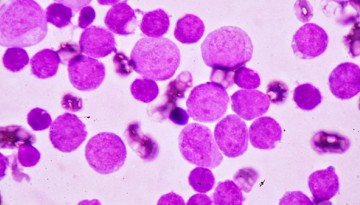
Ongoing monitoring for genetic changes in chronic lymphocytic leukemia during targeted treatment may allow clinicians to adjust patients’ treatments as the cancer evolves.
A $4 million, four-year grant will support a new research center to develop improved treatments for middle-age and older adults suffering from depression.
President Martha E. Pollack has committed the university to a new multi-institution initiative to make public data pertaining to career outcomes for life sciences doctoral students and postdoctoral researchers.
Cornell engineers have demonstrated a method for gathering vital signs using a cheap and covert system of radio-frequency signals and microchip "tags."
A symposium sponsored through the new Academic Integration Initiative aimed to link together collaborative research and discovery across Weill Cornell Medicine, Cornell Tech and Cornell’s main campus in Ithaca.
The Mario Einaudi Center for International Studies has awarded five seed grants and four small grants to support faculty members' international research.
Weill Cornell Medicine researchers have received a grant to conduct an in-depth study of the mechanisms that cause scar tissue to form in the lung and kidney.