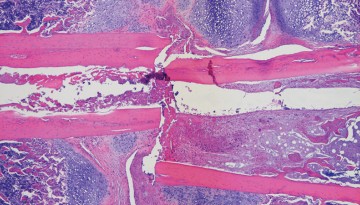
A molecule promoting blood vessel growth in bone can create an environment suitable for bone-building formation, representing a potential target for new drugs to treat osteoporosis.
A Western-style diet triggers changes in the brain that may predispose patients to Alzheimer’s disease decades before they show any sign of cognitive decline.
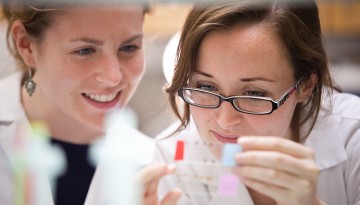
Cornell Tech and Weill Cornell Medicine students teamed up with Roosevelt Island senior citizens to understand technology solutions that could make their lives a little easier.
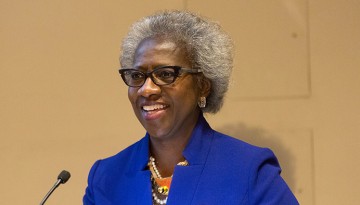
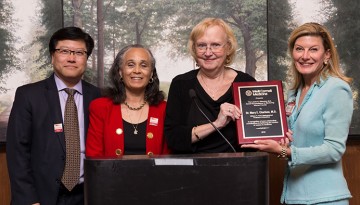
Dr. Hannah Valantine, chief officer for scientific workforce diversity at the NIH, advocated for diversity in academic medicine at Weill Cornell Medicine.
Cornell University held the first Annual Cornell Cancer Research Symposium at the College of Veterinary Medicine on April 5-6 to showcase the breadth of cancer research on the Ithaca campus.
Anthony P. Bretscher, professor of cell biology, and Catherine Lord, professor of psychology at Weill Cornell Medicine in New York City, join Barack Obama, Tom Hanks and 209 others as newly elected members of the American Academy of Arts and Sciences.
Twelve assistant professors from Cornell's Ithaca and New York City campuses have received five-year awards from the National Science Foundation's Faculty Early Career Development program.