The new Roosevelt Island campus of Cornell Tech has catalyzed a slew of innovative academic programs that will benefit not only Cornell Tech students but also students from the Ithaca campus.
Every summer for the last six years, College of Arts and Sciences alumnus Hank Fessler ’77 has welcomed a group of Cornell students to Johns Hopkins University School of Medicine to join research labs and explore careers in medicine.
The National Institutes of Health announced Sept. 27 that Cornell is one of three institutions nationwide to receive funding to establish a collaborative research center for the study of chronic fatigue syndrome.
A study reveals celebrities have power to influence the health care decisions of the general public, and health care professionals should leverage this by offering more information about treatment options.
Errors in the regulation of gene expression may contribute to the development of a common form of blood cancer and point to potential treatment strategies.
Cornell's New York City schools and units gathered to welcome Martha E. Pollack as the university's 14th president at a reception Sept. 14 at Weill Cornell Medicine.
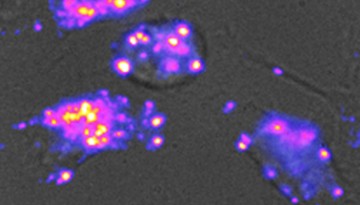
Nano-sized sensors developed by Weill Cornell Medicine and Memorial Sloan Kettering Cancer Center researchers can measure lipids, or fat molecules, in special compartments within live cells.
With architectural design and aesthetics reflecting its mission of collaboration and innovation, Cornell Tech is dedicating a new type of urban campus in the heart of New York City.