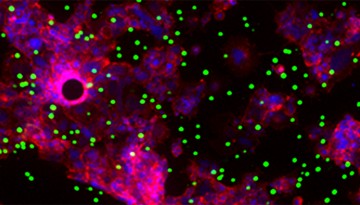
A multi-campus study of lymphoma shows that certain cell mutations in tumors can cause the cancer to be resistant to chemotherapy, with biophysical forces such as fluid flow playing a key role.
The director of the National Cancer Institute discussed advances in precision medicine and immunotherapy to treat cancer at Weill Cornell Medicine March 15.
Cornell will hold the first Annual Cancer Research Symposium to showcase diverse and groundbreaking cancer research on campus, and to better integrate investigators from the Ithaca campus and Weill Cornell Medicine.
Weill Cornell Medicine celebrated a successful Match Day, with 94 percent of the class matching to postgraduate positions at academic medical centers ranked in the top 50 by U.S. News and World Report.
Researchers at Weill Cornell Medicine and Cornell’s Ithaca campus have established a new center to better understand why health outcomes vary among demographic groups.
New research suggests genetic variation in the most essential component of the ribosome, ribosomal RNA, may influence how much and which proteins are made.
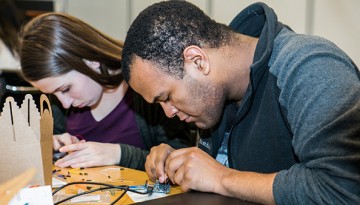
On Feb. 27, 90 students from public high schools across New York City participated in Big Red STEM Day, designed to inspire high school students to consider STEM fields.
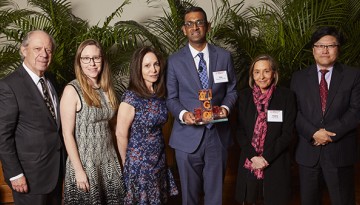
Dr. Vijay Sankaran, who investigates molecular underpinnings of pediatric genetic blood disorders, has been awarded the third annual Gale and Ira Drukier Prize in Children’s Health Research.