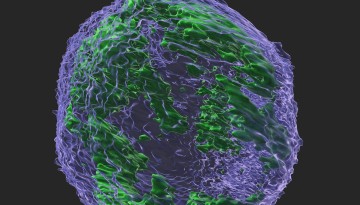
A protein commonly found at high levels in lung cancer cells controls a major immunosuppressive pathway that allows lung tumors to evade immune attack, according to a study led by researchers at Weill Cornell Medicine.
The National Institute on Aging of the National Institutes of Health has awarded a grant to Weill Cornell Medicine to develop a screening tool and intervention for elder neglect in patients with Alzheimer’s disease and related dementias.
A new method can illuminate the identities and activities of cells throughout an organ or a tumor at unprecedented resolution, according to a study co-led by researchers at Weill Cornell Medicine and the New York Genome Center.
The researchers used a machine-learning algorithm to spot symptom patterns in the health records of nearly 35,000 U.S. patients who tested positive for SARS-CoV-2 infection and later developed lingering long-COVID-type symptoms.
The funding will support preliminary disease-related research, in the latest in a series of efforts to create new opportunities for interdisciplinary research.
An artificial intelligence algorithm can determine non-invasively, with about 70% accuracy, if an in vitro fertilized embryo has a normal or abnormal number of chromosomes, according to a new study from researchers at Weill Cornell Medicine.
Those already pregnant at the beginning of the pandemic had a 50% lower exposure to SARS-CoV-2 compared with those who became pregnant after the pandemic began and the general population, Weill Cornell researchers and colleagues found.
The first recorded proof of a bird not seen for 140 years, a gut bacteria that could regulate cholesterol and a senior who risked his own life to rescue a man from an oncoming subway train were among the most-read Cornell Chronicle stories of 2022.