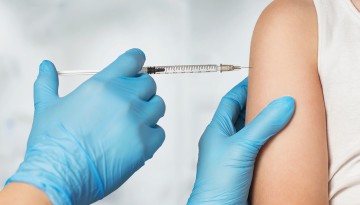
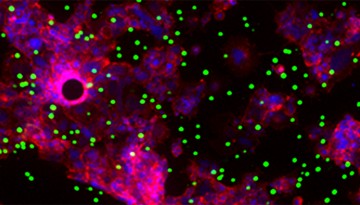
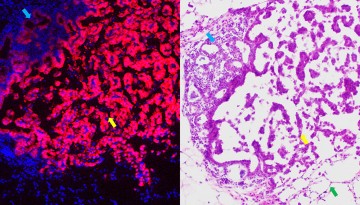
Researchers from Weill Cornell Medicine and colleagues found that two-dose vaccines still provide protection against lung disease in rhesus macaques a year after they had been vaccinated as infants.
A gene linked to autism spectrum disorders plays a critical role in early brain development and may shape the formation of nerve connections in the brain.
A Cornell-led collaboration used machine learning to pinpoint the most accurate means, and timelines, for anticipating the advancement of Alzheimer’s disease.
Robert J. “Bob” Appel ’53, a vice chair of Weill Cornell Medicine’s Board of Fellows, Cornell trustee emeritus and presidential councillor, died Nov. 19 in New York, at age 91.
Three startups – two helping to make a green economy and one creating next-generation microbial images – graduated Nov. 16 from Cornell’s Center for Life Science Ventures business incubator.
The Cornell Board of Trustees and Weill Cornell Medicine Board of Fellows have approved the appointment of Dr. Francis Lee as interim dean of Weill Cornell Medicine and interim provost for medical affairs.
New research offers insight as to why individuals who inherit a mutation in one copy of the BRCA1 gene often develop mutations in their remaining normal copy of the BRCA1 gene, setting the stage for tumors to develop.
A multidisciplinary team of Weill Cornell Medicine researchers has received a five-year $5.7 million grant from the National Cancer Institute at the National Institutes of Health to fund a center aimed at developing messenger RNA vaccines to deter cancer development in at-risk groups.