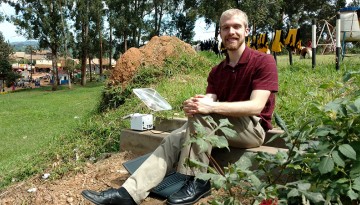
A new exchange program will present biomedical students from Cornell and Arusha Technical College in Tanzania with opportunities from opposite sides of the globe.
With a $7.5 million gift from the Friedman Family Foundation, Weill Cornell Medicine has established a cross-campus center dedicated to improving human health through research in the complex relationship between nutrition, inflammation and the development of disease.
For couples hoping for a baby via in vitro fertilization, chances have improved. A process that once took hours now takes minutes: Cornell scientists developed a device that quickly corrals strong, viable sperm.
Having a partner whom you feel understands and cares about you may lead to a longer life, because stress may seem easier to handle, according to new research by human development expert Anthony Ong.
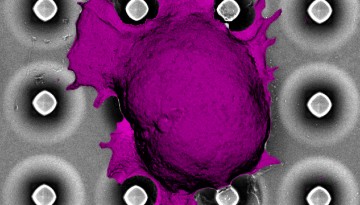
A new Cornell program will train graduate students interested in specializing in “immuno-engineering,” an emerging hybrid field that combines engineering and immunology.
Nine projects were awarded Center for Advanced Technology grants in 2018-2019. The grants are given to faculty members in life sciences fields who partner with a New York state industry for research and development.