Cornell’s Einhorn Center for Community Engagement works with the School of Continuing Education to identify local STEP and Upward Bound students ready to enroll in Cornell courses through Precollege Studies
The Executive Committee of the Cornell Board of Trustees approved his appointment on June 15. White will start as Cornell’s top legal officer on Aug. 20.
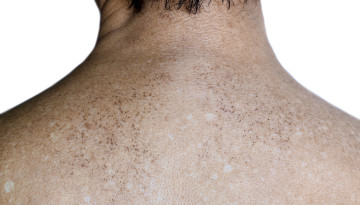
An NSAID-related compound called ampyrone appears to safely boost production of the pigment melanin in human skin, according to a preclinical study led by Weill Cornell Medicine and National Eye Institute investigators.
Glioma, a type of brain cancer, tends to progress toward greater malignancy due to an increasing tendency of the glioma cells to transform into immature, stem-cell-like states.
The startup was founded by Cornell alumni and a professor, inspired by a class in the Cornell SC Johnson College of Business and nurtured through Cornell’s entrepreneurship ecosystem.
A new Duffield Engineering biomedical engineering course will challenge students to investigate real-world failures in women’s health technologies and identify opportunities for better design.
Each grantee will receive dedicated support and funding from the center to pursue innovative and creative projects that deepen academic knowledge and connect to the mission of the center to create more just and equitable futures.
The U.S. Food and Drug Administration (FDA) has granted Breakthrough Device Designation to NSE-FAST®, the first rapid blood test designed to aid in the diagnosis of acute ischemic stroke.
Researchers have identified a site where a commonly used anesthetic binds to sodium ion channels, revealing a molecular mechanism that may explain how these drugs dampen communication between neurons.