Cornell researchers have been awarded $4.2 million by the National Science Foundation to explore natural genetic variation in the tomato immune system and to use the findings to improve crops.
New York Farm Day Sept. 14 served up yogurt, chocolate, duck, whiskey, clams to wine ice cream on Capitol Hill as New York’s agricultural community showed their wares to the legislative community.
Cornell Cooperative Extension specialists excelled in a recent statewide disaster response simulation administered by New York State's Office of Emergency Management.
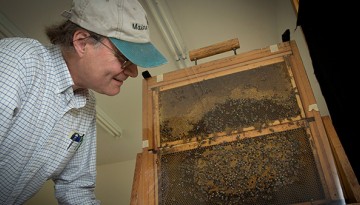
Thomas Seeley and four engineers from Georgia Tech will share the Fifth Annual Golden Goose Award for the "honeybee algorithm," which adapted basic bee research to the $50 billion web hosting industry.
The annual Iscol Family Program for Leadership Development in Public Service Lecture Tuesday, Sept. 27, at 7:30 p.m. in G10 Biotech, features criminal justice reformer Glenn E. Martin.
Eswar Prasad's latest book, "Gaining Currency: The Rise of the Renminbi," describes how China's currency is reshaping global finance, and explores the implications for the dollar's status as the dominant global reserve currency.
In the 2017 U.S. News & World Report's Best National Universities rankings of 310 schools, Cornell held steady at No. 15 for the third consecutive year, while Dyson and Engineering were No. 9.
Cornell's new faculty fellowship in fisheries and aquatic sciences named for Dwight A. Webster, the professor of Fishery Biology who laid the groundwork for the Adirondack Fishery Research Program.
Twelve faculty members from seven departments have been named Engaged Cornell Faculty Fellows for 2016–17. The program supports faculty who do community-engaged teaching or research.