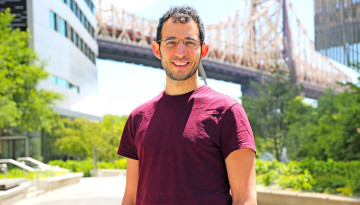
Makora, a startup founded by assistant professor Mohamed Abdelfattah, has received a $1.75 million award from the National Science Foundation-supported STRIDE Ventures AI Efficiency Challenge.
Researchers proposed a novel way to manage the increased demand for electricity by data centers: a credit market that would allow centers that are facing required cutbacks to pay flexible energy users to take on their obligations when the grid is strained.
The work is paving the way for hybrid optical-electronic systems that could reduce the energy and computational resources required for AI-driven image analysis and other visual inference tasks.
Kenji Yasuda, assistant professor in the School of Applied and Engineering Physics, was honored for his work with stacks of atomically thin materials that host emergent quantum phenomena.
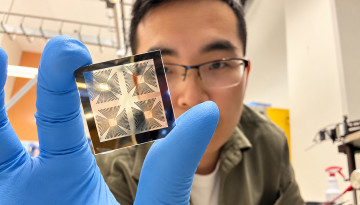
Set within a 3-millimeter area on a chip, the new device produces hydrogen gas bubbles on a grid of electrodes, then powers the bubbles up with acoustic energy through ultrasound.
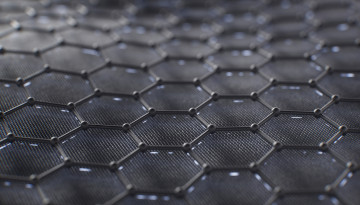
Researchers at the Cornell Duffield College of Engineering have found that electrically sliding the layers of ultrathin graphene can switch the material between distinct magnetic states that persist even after the voltage is removed.
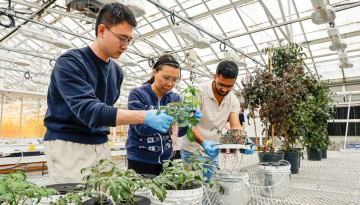
The Cornell-led multi-institutional Center for Research on Programmable Plant Systems will continue work to transform agriculture by enabling direct two-way communication with crop plants’ internal processes.
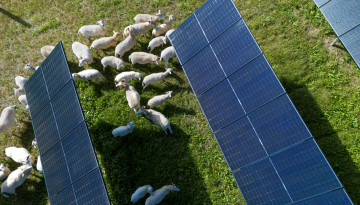
As solar grazing expands across the country, new research helps sheep farmers increase profitability and sheds light on the how the number of sheep in solar array fields interacts with beneficial insects.