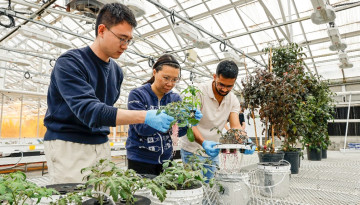
The Cornell-led multi-institutional Center for Research on Programmable Plant Systems will continue work to transform agriculture by enabling direct two-way communication with crop plants’ internal processes.
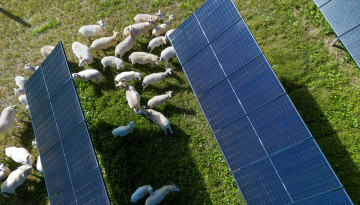
As solar grazing expands across the country, new research helps sheep farmers increase profitability and sheds light on the how the number of sheep in solar array fields interacts with beneficial insects.
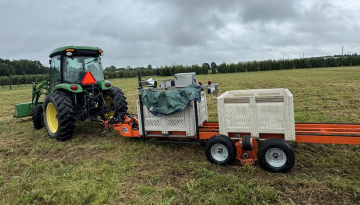
Ficio, a startup founded by Youhanna Meleka, M.Eng. ’26, is developing an AI platform for the food supply chain that can run on different machines and tackle very different jobs – from sorting apples in an orchard to turning potatoes into french fries.
Riley Culberg, assistant professor, is a member of the science team for Snow4Flow, a new NASA mission to study how much ice glaciers contain and how much new snow they receive.
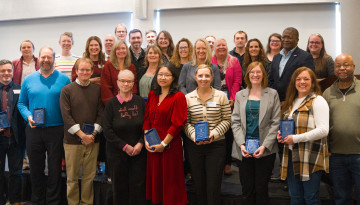
The Cornell Duffield College of Engineering celebrated its fifth annual EPICC Awards on Oct. 8 in Statler Auditorium, recognizing faculty and staff whose work exemplifies the college’s core values of excellence, purpose, innovation, community and collaboration.
Researchers designed a new, faster form of two-photon fluorescence imaging for observing cell metabolism in real time, a method that could enable quicker screening of new therapeutic treatments.
A programmable photonic chip that can be reconfigured to perform different tasks could make quantum technologies more flexible – an approach associate professor Peter McMahon will explore as a 2026 Experimental Physics Investigator with the Gordon and Betty Moore Foundation.