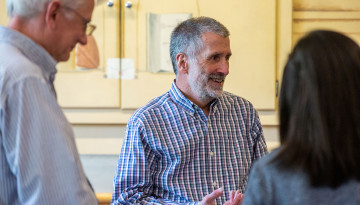
For 36 years at Cornell, Professor T. Michael Duncan approached teaching with the same rigor he brought to research. Now his school wants to honor his legacy with a new fellowship.
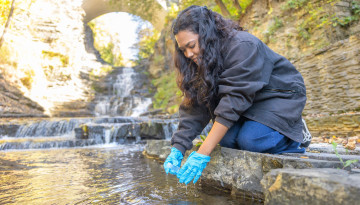
Five Cornellians join 175 global experts to outline research priorities that can inform future national and regional climate assessments in a new special collection of the American Geophysical Union and the American Meteorological Society.
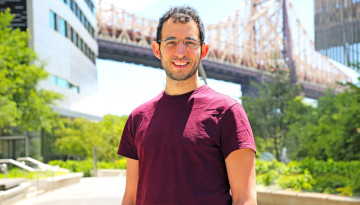
Makora, a startup founded by assistant professor Mohamed Abdelfattah, has received a $1.75 million award from the National Science Foundation-supported STRIDE Ventures AI Efficiency Challenge.
Researchers proposed a novel way to manage the increased demand for electricity by data centers: a credit market that would allow centers that are facing required cutbacks to pay flexible energy users to take on their obligations when the grid is strained.
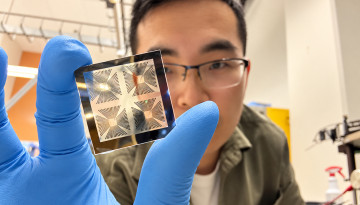
The work is paving the way for hybrid optical-electronic systems that could reduce the energy and computational resources required for AI-driven image analysis and other visual inference tasks.
Kenji Yasuda, assistant professor in the School of Applied and Engineering Physics, was honored for his work with stacks of atomically thin materials that host emergent quantum phenomena.
Set within a 3-millimeter area on a chip, the new device produces hydrogen gas bubbles on a grid of electrodes, then powers the bubbles up with acoustic energy through ultrasound.
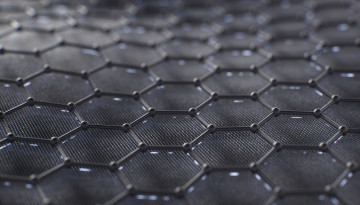
Researchers at the Cornell Duffield College of Engineering have found that electrically sliding the layers of ultrathin graphene can switch the material between distinct magnetic states that persist even after the voltage is removed.