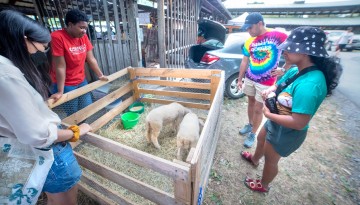
This summer, visitors to Ithaca’s Sciencenter, a hands-on children’s museum, took part in a special exhibit made possible by a new collaboration between the museum, the State University of New York College at Cortland and Cornell’s Department of Animal Science.
As the residence halls honoring Ruth Bader Ginsburg, Hu Shih and Barbara McClintock opened, resident advisers handed these newest Cornellians their room keys – and their futures.
A new study finds that certain species of bacteria in the gut interact with and help balance levels of dietary cholesterol by using it to create a molecule that plays important roles in human health.
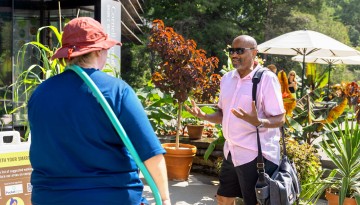
The exhibition includes an outdoor plant display, audio tour and an indoor exhibit, all describing plants that are significant to the Black experience in the Americas dating back to the transatlantic slave trade.
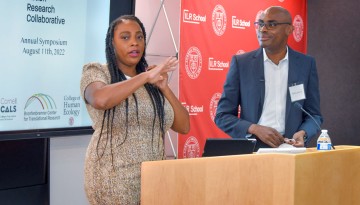
Members of Cornell’s Action Research Collaborative joined representatives from New York City agencies at a symposium Aug. 11 to discuss innovative new solutions aimed at dismantling the systemic racism that has led to inequities around food, nutrition, education, health and employment.
A world leader in the study of population genetics of the fruit fly, Aquadro studies the amount of diversity that exists within and between the genomes of organisms.
Seafaring drones soon will allow Cornell scientists to examine the abundance and distribution of forage fish – like zooplankton and shrimp – that nourish species higher on the food chain.
New community-driven network of plant biotechnologists will improve plant transformation capacity, addressing a major bottleneck in plant science needed to feed a booming global population during an era of climate change.