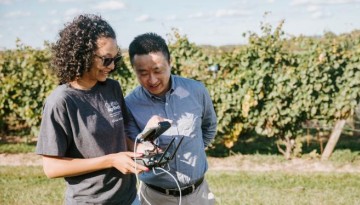
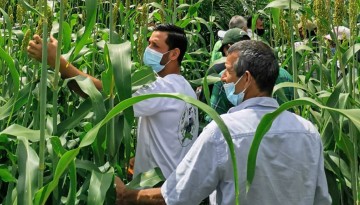
New community-driven network of plant biotechnologists will improve plant transformation capacity, addressing a major bottleneck in plant science needed to feed a booming global population during an era of climate change.
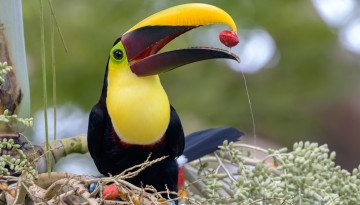
Birds living in tropical mountains have narrow ranges. Why not make use of the whole mountain? A new study finds the dominant influence for their choice has to do with the neighbors.
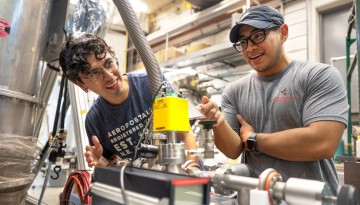
Thirteen enlisted military service members and veterans completed an intensive two-week curriculum at Cornell in partnership with the nonprofit Warrior-Scholar Project, which helps veterans transition to higher education.
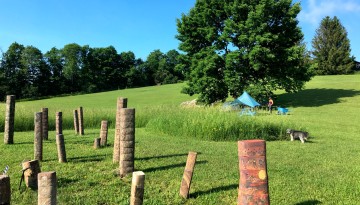
In a series of research projects and as a designer, Martin Hogue, associate professor of landscape architecture, has explored the history and culture of camping.
Four undergraduates are working with a professor this summer to research how forests cycle and store carbon and nutrients in trees, microbes, and soil, and how these processes respond to changes in climate, air pollution and disturbances.
A New York state survey, supported by Cornell bee experts, finds that more than half of important native pollinators may be at risk of disappearing from the state – potentially threatening crops, wildflowers and insect diversity.