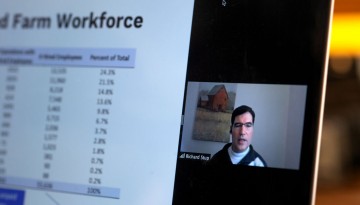
Richard Stup, agricultural workforce specialist, analyzed the key issues facing New York state farmers this year during Dyson's 2021 Agricultural and Food Business Outlook Conference, held virtually Jan. 25.
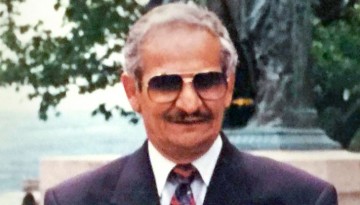
Kavous Keshavarz, professor emeritus in the Department of Animal Science and an expert in poultry nutrition, died Jan. 7 in Atlanta, Georgia. He was 82.
As New Yorkers emerge from the pandemic’s economic morass, New York Lt. Gov. Kathy Hochul acknowledged a tough path ahead, but shared hope for the state’s future at Cornell’s annual town-gown regional meeting.
Steven Kyle offered his annual projection for the U.S. economy during Dyson’s 2021 Agricultural and Food Business Outlook Conference, held virtually Jan. 25.
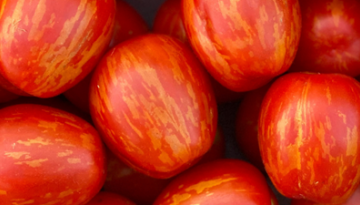
Cornell AgriTech releases a new variety of heirloom tomato, dubbed Cherry Ember, which stands out for its striking colors, bright flavors, high yield and tough-to-crack skin.
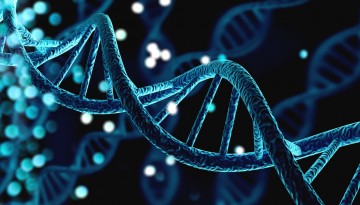
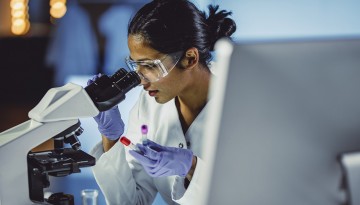
Researchers at Weill Cornell Medicine and Cornell’s Ithaca campus have developed a new computational method for studying genetic and environmental interactions and how they influence disease risk.
Ian Owens, the Smithsonian National Museum of Natural History’s deputy director, has been named the next executive director of the Cornell Lab of Ornithology. He will take the helm of the 106-year-old institution on July 1.
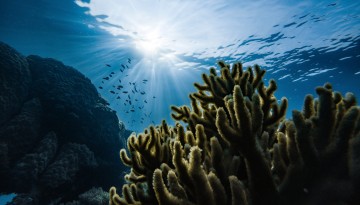
Attracting more than 1,000 students every fall, Intro to Oceanography is the largest course at Cornell. When Senior Lecturer Bruce Monger started recording the lectures for remote teaching, he partnered with eCornell and ended up developing a publicly accessible oceanography and climate sustainability course too.
A streamlined process for awarding green cards to international STEM doctoral students graduating from U.S. universities could benefit American innovation and competitiveness, according to new research.