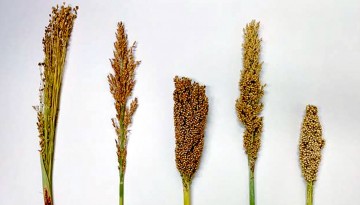
A new study found that harmful mutations in sorghum landraces – early domesticated crops – decreased compared to their wild relatives through the course of domestication and breeding.
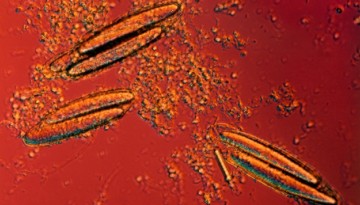
New research reveals how proteins, called “pioneer transcription factors,” help turn on key genes that give cell types their unique properties and functions.
Establishing camera use as the norm, explaining the reasons that cameras improve the class and employing active learning techniques could help improve students’ use of cameras during online classes, a new Cornell study suggests.
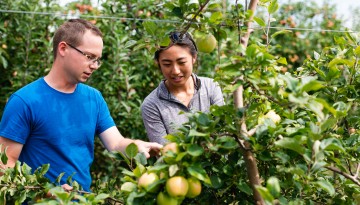
Cornell AgriTech, a preeminent center for agriculture and food research, recently launched a new committee to drive diversity, equity and inclusion initiatives on the Geneva campus.
The grant from The Andrew W. Mellon Foundation’s Just Futures Initiative will bring together scholars from across the university and beyond to study the links between racism, dispossession and migration.
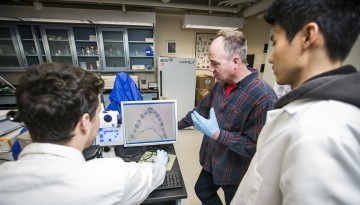
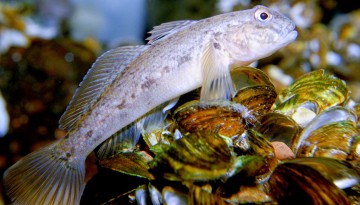
In a proof-of-principle study, Cornell researchers describe a new technique in which they analyzed environmental DNA – or eDNA – from water samples in Cayuga Lake to gather nuanced information about the presence of invasive round goby fish.
As part of its mission to make Cornell a more diverse and inclusive environment for faculty, staff and students, the Presidential Advisors on Diversity and Equity have awarded three grants of $15,000 apiece for 2021 programming.