Cornell Atkinson is soliciting nominations for The Earthshot Prize, a new global award supported by The Duke and Duchess of Cambridge to tackle the world’s biggest environmental challenges.
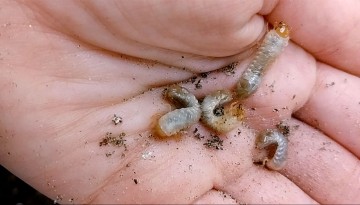
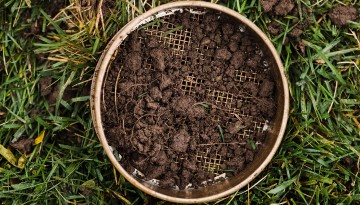
A team of Cornell scientists will use acoustic technology to develop efficient and affordable ways to manage soil-dwelling pests and their predators, thanks to a two-year grant from the USDA.
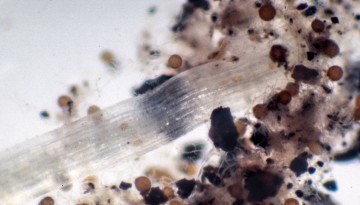
A new grant will investigate how bacteria that live inside the cells of fungi may shape the biology, evolution, biodiversity and function of these fungi – research with important practical applications for industry, sustainable agriculture and preventing food spoilage.
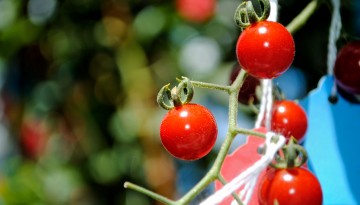
Researchers from Boyce Thompson Institute have created a reference genome for the predecessor of the modern tomato, and discovered sections that underlie fruit flavor and disease resistance, among other characteristics.
Cornell faculty have until Friday, Dec. 11, to submit nominations for the A.D. White Professors-at-Large Program, specifically in the areas of humanities, life sciences and physical sciences.
Two Cornell soil scientists have helped develop a powerful new tool that will help researchers and policymakers map the global potential for carbon sequestration.
Mildred Warner has received the ACSP Margarita McCoy Faculty Award for the advancement of women in planning in higher education through service, teaching and research.
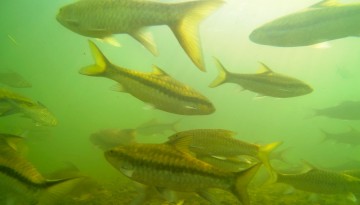
A collaboration between researchers from Cornell and the University of Wisconsin-Madison has found that small, community-based reserves in Thailand’s Salween River Basin are serving as critical refuges for fish diversity in a region whose subsistence fisheries have suffered from decades of overharvesting.
Marcos Simoes-Costa in the Department of Molecular Biology and Genetics, and Dan A. Landau with Weill Cornell Medicine have both been awarded $600,000 from the Sontag Foundation to advance their research into brain cancer.