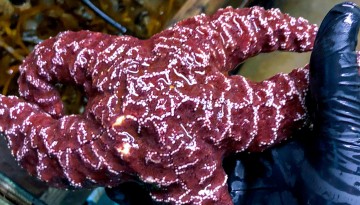
New Cornell-led research suggests that starfish, victims of sea star wasting disease, may actually be in respiratory distress, as nearby organic matter and warming oceans rob them of their “breath.”
Grants awarded recently by the Cornell Center for Social Sciences seeded research projects on topics ranging from COVID-19 and policing to clean energy and product design, led by scholars from across the university.
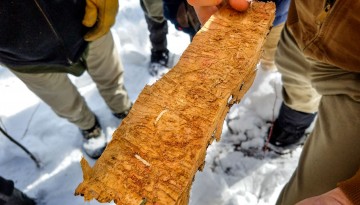
Cornell will be removing more than 1,700 of its ash trees infested by devastating emerald ash borer insects, mostly between January and March 2021, to reduce potential harm to people and property.
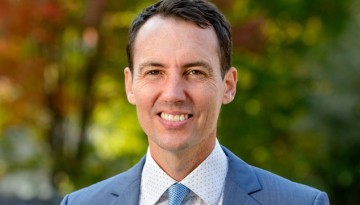
Benjamin Z. Houlton, the Ronald P. Lynch Dean of the College of Agriculture and Life Sciences, joined a panel helping to identify key pathways for terrestrial carbon dioxide removal that merit further investment.
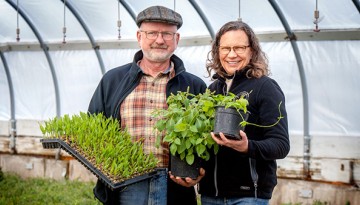
As hunger rose during the pandemic, alumni Rick and Laura Pedersen responded by sharing the bounty of their farm with local food bank in upstate New York. They have been named Cornell Alliance for Science Farmer of the Year.
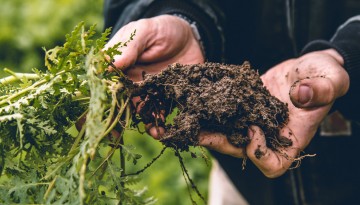
A new study describes a breakthrough method for imaging the physical and chemical interactions that sequester carbon in soil at near atomic scales, which may have implications for mitigating climate change.
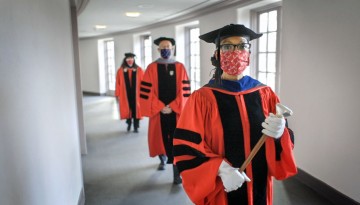
On Dec. 19, nearly 1,500 Cornell students celebrated their winter graduation in a virtual recognition ceremony viewed around the world – the first such event at Cornell, and a fitting end to what President Martha E. Pollack called “a semester like no other at Cornell.”
This month, a crew of mostly Native ironworkers on the North Campus Expansion Project presented Native students with the cloth image of the Hiawatha wampum belt they’d flown from their crane.