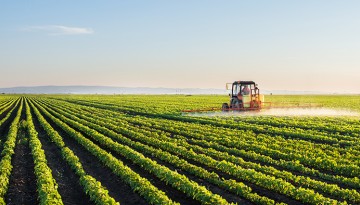
Food insecurity can be blamed on unemployment economics rather than on coronavirus hot spots, doctoral candidate Anne Byrne said in testimony Sept. 9 before at a New York State Assembly hearing.
Unearthed, digitized and soon to be repatriated, artifacts from two Native American towns are beginning to share their rich stories online thanks to a collaborative project by anthropologists, librarians and Indigenous community members.
The Plant Science Research Network presents an action plan for its researchers to maximize their impact on pressing global issues such as human health and climate change.
Cornell’s Feed the Future Innovation Lab for Crop Improvement announces $4 million in funding to launch four Centers of Innovation aimed at developing more resilient, nutritious crops.
Scientists have engineered a key plant enzyme and introduced it in Escherichia coli bacteria in order to create an optimal experimental environment for studying how to speed up photosynthesis, a holy grail for improving crop yields.
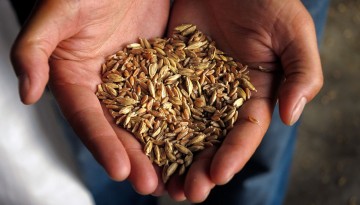
A Cornell scientist is leading a multi-institution team that’s helping turn diverse and ancient grains into staple foods throughout the Northeast and Midwest, thanks to a three-year, $2 million grant from the U.S. Department of Agriculture.
The NSF has awarded a $1.5 million grant for Cornell researchers to study the health dangers, changes in the lake food web and socioeconomic challenges when these algal blooms produce toxins.