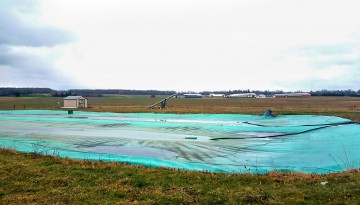
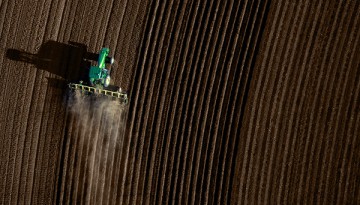
New York agriculture has the capacity to mitigate its own greenhouse gas emissions, two Cornell researchers say in a state-funded report commissioned by the New York State Department of Agriculture and Markets.
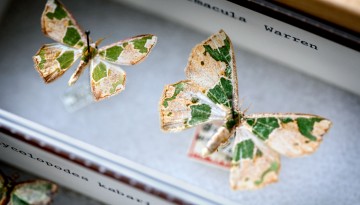
As director and head curator of the Cornell University Insect Collection, Corrie Moreau has numerous tasks on her to-do list, including one that could last her entire career: digitizing the collection’s 7 million specimens.
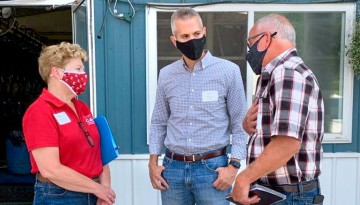
New York Congressman Anthony Brindisi met Aug. 10 with farmers and agricultural thought leaders – including Kathryn Boor ’80, the Ronald P. Lynch Dean of the College of Agriculture and Life Sciences – for a tour of E-Z Acres dairy farm in Homer.
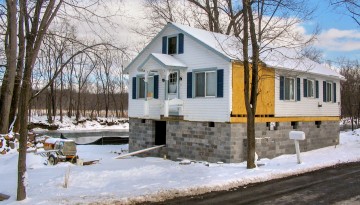
In flood-prone areas of the Hudson River valley in New York state, census areas with more white and affluent home owners tend to file a higher percentage of flood insurance claims than lower-income, minority residents, according to a new study.
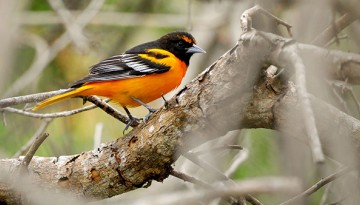
The debate is over: According to scientists from the Cornell Lab of Ornithology, Bullock’s and Baltimore orioles will remain separate species, despite hybridization where their ranges meet in the Great Plains.
Cornell’s Art DeGaetano is one of nine scientists to co-author a USDA report to help the nation’s farmers and commercial agricultural managers reduce risk in the face of climate change.
Benjamin Houlton, director of the John Muir Institute of the Environment and professor of global environmental studies at the University of California, Davis, has been named the Ronald P. Lynch Dean, effective Oct. 1.
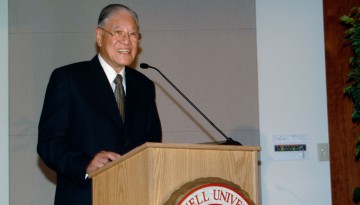
Lee Teng-hui, Ph.D. ’68, the first popularly elected president of Taiwan, who helped guide the island toward prosperity and democracy, died July 30 in Taipei. He was 97.
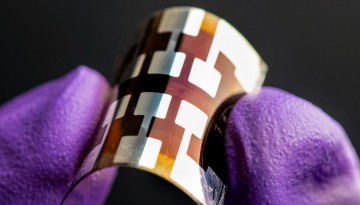
When it comes to the future of solar energy cells, say farewell to silicon, and hello to calcium titanium oxide – the compound mineral better known as perovskite.