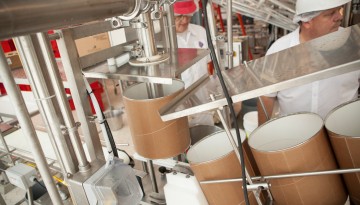
To keep New York’s food processing industry safe during the COVID-19 pandemic, Cornell has created a comprehensive website for commercial processors: Food Industry Resources for Coronavirus (COVID-19).
As Cornell puts noncritical research on hold, researchers on campus have found that everyone is making extra efforts to help each other through the transition.
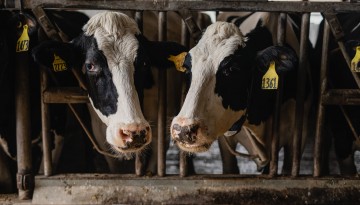
New York state students interested in dairy farming careers will get a boost thanks to a new scholarship program from the Chobani Foundation and the College of Agriculture and Life Sciences.
New York wineries and grape growers have become increasingly interested in sustainability as consumer express their growing interest in the provenance of their wines. This year’s B.E.V. NY conference focused on sustainability.
Fay Wei Li, from the Boyce Thompson Institute, and researchers from across the globe have sequenced the genomes of three hornworts, which could lead to crops that produce higher yields and use less synthetic fertilizer.
Faculty from the Cornell SC Johnson College of Business discussed whether businesses have the right incentives to address the climate crisis, or if policy intervention is needed.
Minorities and lower-income people are more likely than high-income people and whites to consider human factors such as racism and poverty to be environmental issues, a study co-led by Cornell researchers found.