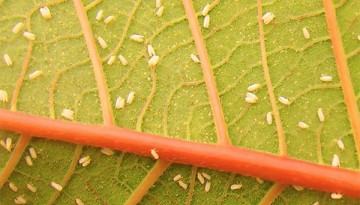
Uncovering the details of a 100 million-year-old symbiosis between bacteria and whiteflies opens the door for controlling an insect pest that is rated one of the top 10 invasive species on the planet.
In the face of climate change and inevitable sea level rise, Cornell scientists studying the Hudson River estuary have forecast 33 percent more wetland area by the year 2100.
Blue-collar training without a strong college-preparatory focus leads to blue-collar jobs for men but penalizes women in the labor market, says April Sutton, a postdoctoral fellow at the Cornell Population Center.
Jan Low, M.S. '85, Ph. D. '94, an agricultural economist whose work on agriculture and nutrition has improved the health of millions in sub-Saharan Africa, is a 2016 World Food Prize co-laureate.
On 4-H National Youth Science Day Oct. 5, young people nationwide will undertake an interactive engineering design challenge created by Cornell Cooperative Extension and the National 4-H Council.
Each year $160 billion worth of wasted food ends up in America's landfills. A Cornell economist has received a two-year, $500,000 USDA grant to get consumers and food distributors to squander less.
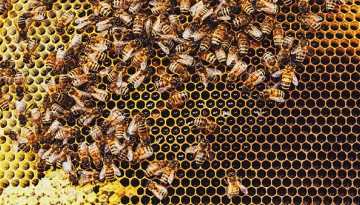
A team led by Cornell researchers has received a five-year, $2.2 million National Institutes of Health grant to better understand how pathogens that infect bees and other pollinators are spread.