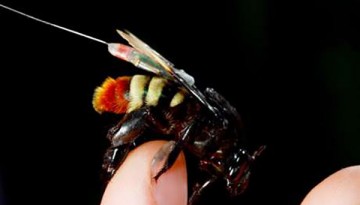
By looking at how past climate changes may have affected orchid bees, Cornell researchers make predictions of how these forest bees might respond to future climate changes.
In the continuing effort to save energy, enhance environmental operations and increase ecological education, Cornell earned its third consecutive gold STARS rating from the Association for the Advancement of Sustainability in Higher Education.
A student team that devised a plan to sell certain public tweets to Google and Microsoft has won first prize in the university’s second annual Stephen S. J. Hall Ethics Case Competition held March 7 at the School of Hotel Administration.
With so few available academic jobs, Cornell will start a NIH-funded pilot program to help train life sciences graduate students and postdocs for nonacademic positions. A kickoff event is March 18.
With help from Cornell, a new beverage is making its way into stores beginning this April: It is called Vertical Water, and it's the sweet water sap that makes its way up maple trees from the soil.
Eight of Cornell’s graduate engineering fields, three computer science specialties and five other science areas were ranked in the top 10 in U.S. News and World Reports’ 2015 “Best Graduate Schools,” released March 11. Cornell Law School earned the top spot for its diverse student body.
Cornell is part of a new, multistate, $3 million U.S. Department of Agriculture grant to better understand how selectively breeding their herds to encourage milk production is reducing their fertility.