In the immortal words of Yogi Berra, it's like déjà all over again. The New York Yankees and the New York Mets, now playing in each of their league's championship series, appear to have climatological history on their side.
Biologists and acoustic engineers based at Cornell will join researchers at two sites in Africa in a new program to monitor the numbers and health of forest elephants by eavesdropping on the sounds they make. New monitoring procedures will be tested in the Central African Republic.
To examine the forces working against tomorrow's young farmers in today's changing world and the problems of domestic food security, Cornell will be a viewing site for the 16th annual World Food Day teleconference.
Years from now, democratically determined population-control practices and sound resource-management policies could have the planet's 2 billion people thriving in harmony with the environment. Lacking these approaches, a new study suggests, 12 billion miserable humans will suffer a difficult life on Earth by the year 2100.
In recent days New York state has faced a major outbreak of illness, and a fatality, caused by the E. coli O157:H7 bacterium. The bacterium is believed to have been spread through infected well water.
Two prominent entomologists, one from Cornell, warn that three recent studies on the effects of genetically engineered crops have distorted the debate about engineered crops and that this could have "profound consequences" for science and public policy.
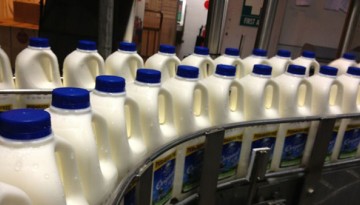
Cornell's Department of Food Science has selected two commercial dairies as producing the highest quality milk in New York state. The annual selection is tied to the New York State Milk Quality Improvement Program, sponsored by the New York Milk Promotion Order.
Coupling the organic and inorganic, biological engineers at Cornell have demonstrated the feasibility of extremely small, self-propelled bionic machines that do their builders' bidding in plant and animal cells, including those in humans.